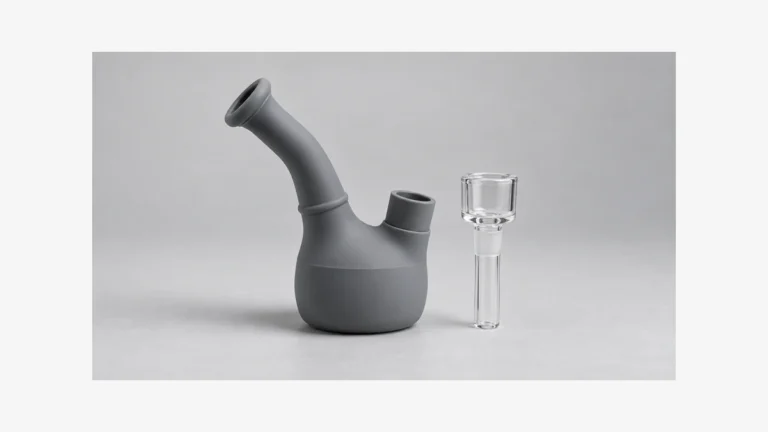
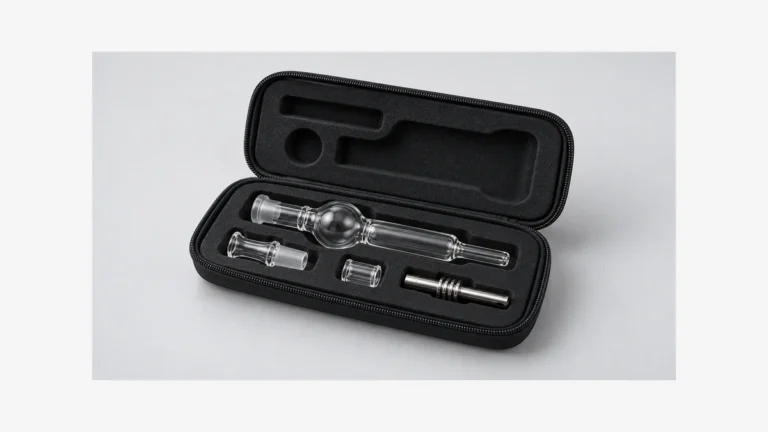
A glass dabber can look smooth from one angle and show a pale mark from another. That is a poor basis for deciding that the mark is harmless, or that the whole tool is ruined. Start by identifying the object and the location of the change. A solid glass hand tool, a hollow collector and a glass rod intended for another purpose are different accessories, even when a search result groups them together.
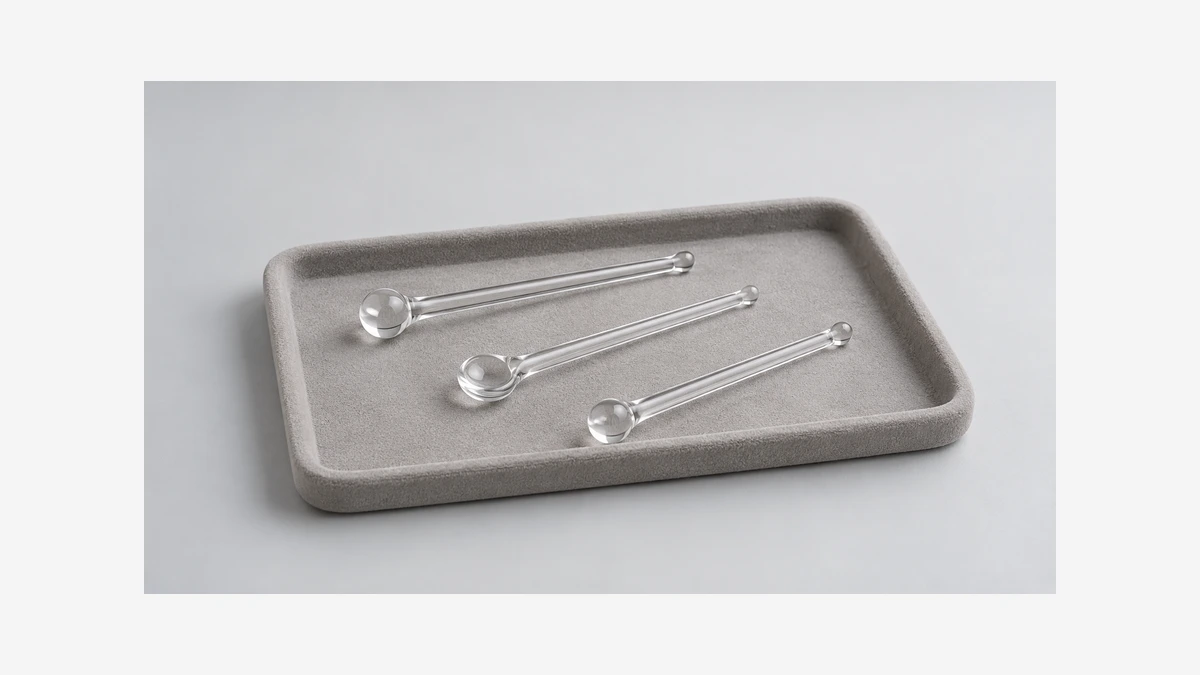
For an owner who already has the tool, the immediate questions are practical: is an end visibly damaged, what does the maker identify as its material, and where can it rest without touching the other tools? Color, decorative shape and a reassuring forum reply cannot answer those questions together.
🏷️ 1. Identify the glass dabber before borrowing its care advice
The word dabber is used loosely. One listing may show a solid rod with a rounded or flattened end. Another discussion may actually concern a hollow straw. A third may concern a deliberately heated glass rod. Similar names do not make their functions, care instructions or permitted handling interchangeable.
That confusion appears in a thread titled Glass dab tool? Replies initially pointed to one kind of accessory before the owner clarified that a different object was meant. The relevant lesson is about terminology. The thread is not a set of care instructions for an ordinary solid hand tool. The heating directions discussed there are outside this article.
A useful description begins with what is visible: solid or hollow, one piece or joined to a handle, single-ended or double-ended. If an end has a hole, note it. If a decorative handle conceals the joint with the shaft, leave that construction uncertain rather than calling the whole object solid glass.
This article concerns the condition and storage of an empty, cool solid accessory. For another material, the ceramic-tool explanation uses its own construction categories. Advice for a ceramic tip attached to a metal handle should not quietly become a specification for a one-piece glass rod.
📐 2. A rounded end still needs a place of its own
A tool’s outline is more useful for arranging storage than its decorative name. Look at the widest end, any bend in the shaft and any enlarged handle. A narrow sleeve may accommodate the shaft but stop at a broad paddle. A long compartment can still be too shallow for a raised ornament.
For a double-ended tool, both ends need consideration. A photograph showing one tip resting in a recess says little about the other end if it is cropped out. An arrangement should account for the whole object, rather than treating a decorative end as a handle with no surface to protect.
In a glass-versus-metal tool discussion, participants mentioned dropped tools, chipping concerns and ends too broad for their particular setup. Those are individual experiences and preferences. They do not establish a breakage rate or prove that a glass shape is universally practical.
The useful response is to describe your own object’s outline. Use its intended resting place as the storage instructions allow, without forcing an end into a narrow opening. If a case is designed for a different shape, its unused length does not compensate for contact at the tip.
A mixed tool kit has several separate storage jobs. The slot for a short metal implement may not suit a long glass one. Keeping those locations distinct also makes it easier to know which object a previous photograph or care note refers to.
🔍 3. A bright line is an observation, not a material test
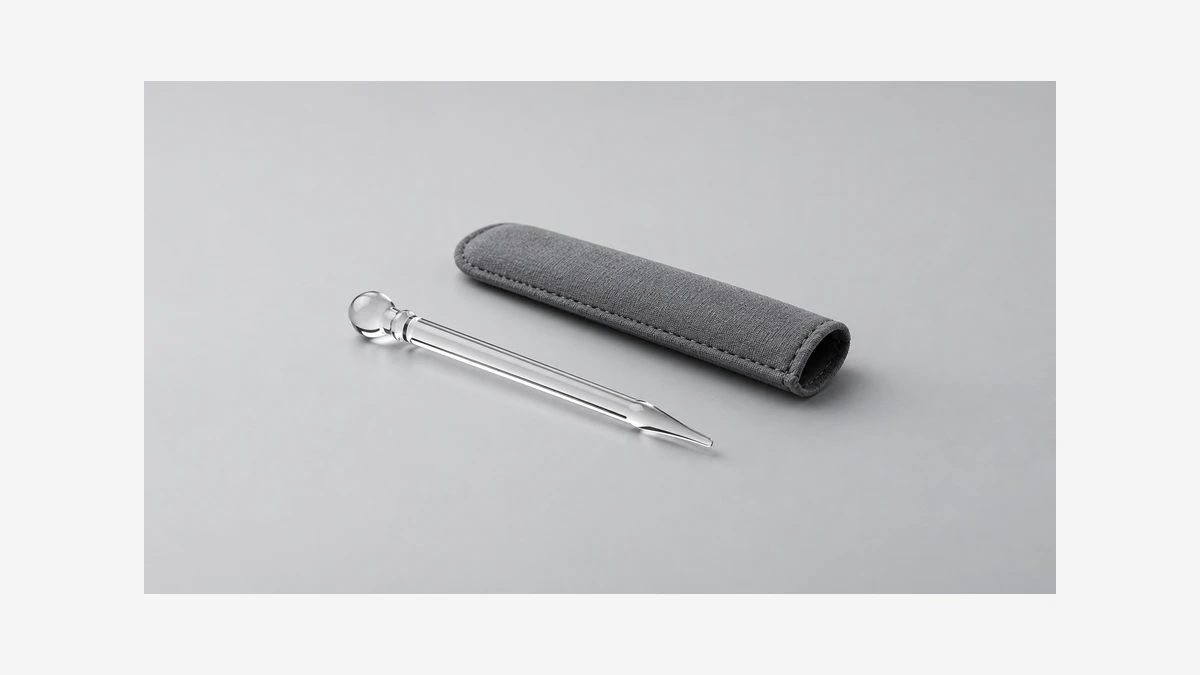
Curved transparent surfaces create reflections that change with the viewing angle. A single image can show a bright line without establishing whether it is a reflection, material on the surface or a change to the glass. An image helps locate the question; it should not become a promise that the tool is intact.
Photograph a questionable area against a plain background with the object safely supported. Include a wider view so its location is clear, then a closer view. The maker needs to know whether it is on an end, the shaft, a bend or a handle junction. A close crop can hide that information.
A previous photograph of the same object is more relevant than a similar tool online. Small handmade or decorative details can differ. A rounded end on another product does not prove the original outline of this end, especially when the original packaging and specifications are gone.
Do not run a finger, fingernail or cloth across a suspected chip to see whether it catches. Do not scrape the mark with another object. These actions are unnecessary for producing a useful visual description and do not provide a reliable assessment of the glass’s condition.
For a photograph series, keep the whole tool in the first frame. In the next frame, show the marked end with enough shaft visible to identify which end it is. This is particularly helpful for double-ended pieces with similar profiles. The photographs should document the concern without requiring the glass to touch another object as a demonstration.
Describe a mark’s position relative to a recognizable feature rather than assigning a precision the image cannot support. A pale area beside the paddle shoulder is more informative than a guessed depth. If the image is blurred, say so. A sharper crop cannot be recovered by confidently naming what an indistinct line supposedly represents.
⚠️ 4. Visible damage changes the question
DWK’s laboratory-glass guidance advises against using glass with visible scratches, chips, cracks or etching. This is a limited physical-condition reference, not certification of a dabber. Take visibly damaged accessories out of service rather than treating them as sound because a defect is small.
There is a difference between asking what a cloudy area might be and seeing a piece of the end missing. The first remains an identification question. The second is already a change in shape. A sleeve or careful photograph does not reverse that change or establish that further handling is acceptable.
Keep damaged glass separate from intact accessories while following the maker’s and local disposal guidance. Do not return it to a common pouch where someone may mistake it for another tool. Keep the unresolved object identifiable instead of turning a storage decision into a repair attempt.
If the condition is uncertain, state that uncertainty when contacting the maker. Say where the mark is and when it was noticed. There is no need to invent an explanation about manufacturing, a cleaner or an unnoticed impact. Those may be questions, but the image does not establish them as facts.
🎨 5. Color cannot identify the formulation
An owner in a colored-glass discussion asked whether color changed the tool’s safety. Replies offered assurances without product-specific evidence. They show why the question arises; they do not establish the composition, finish or suitability of the photographed object.
A photograph can describe color without identifying how it was produced. It cannot provide a formulation, confirm the presence or absence of a coating, or establish a temperature rating. Amber or blue is a visual description. Calling a surface chemically inert would require a different kind of evidence.
📄 5.1 Ask about the surface as well as the body
If the maker identifies a glass type, ask whether that description applies to the complete tool or only one part. A separate handle, decorative detail or applied finish needs its own identification. This matters when a listing uses one material name for several visibly different sections.
The answer may be incomplete. A product name, color option and stock photograph do not necessarily provide a care specification. Preserve the actual reply without upgrading a short description into an assurance about coatings, durability or heat. Color alone cannot supply those missing details.
📦 6. Keep each end clear of neighboring accessories
An open drawer is a place, but not automatically a defined resting arrangement. A tool can be easy to see while lying against another hard object. Consider where both ends rest and what shares the space. A compartment only separates objects if the intended arrangement actually keeps them apart.
The word padded does not describe every contact surface in a case. There may be a zipper, rigid seam, pocket edge or neighboring accessory near the glass end. Identify the outline around the whole tool rather than assuming the soft exterior accounts for every part inside.
Use the storage arrangement specified for the accessory. Do not force it into an elastic loop or improvise a tight restraint around a narrow section. If its original holder is missing, record the complete shape and ask which existing configuration it was designed to use.
The titanium-tool article addresses another material. Its relevance is the need to keep tools individually recognizable. It is not a reason to store metal and glass ends pressed together or to assume their care instructions are equivalent.
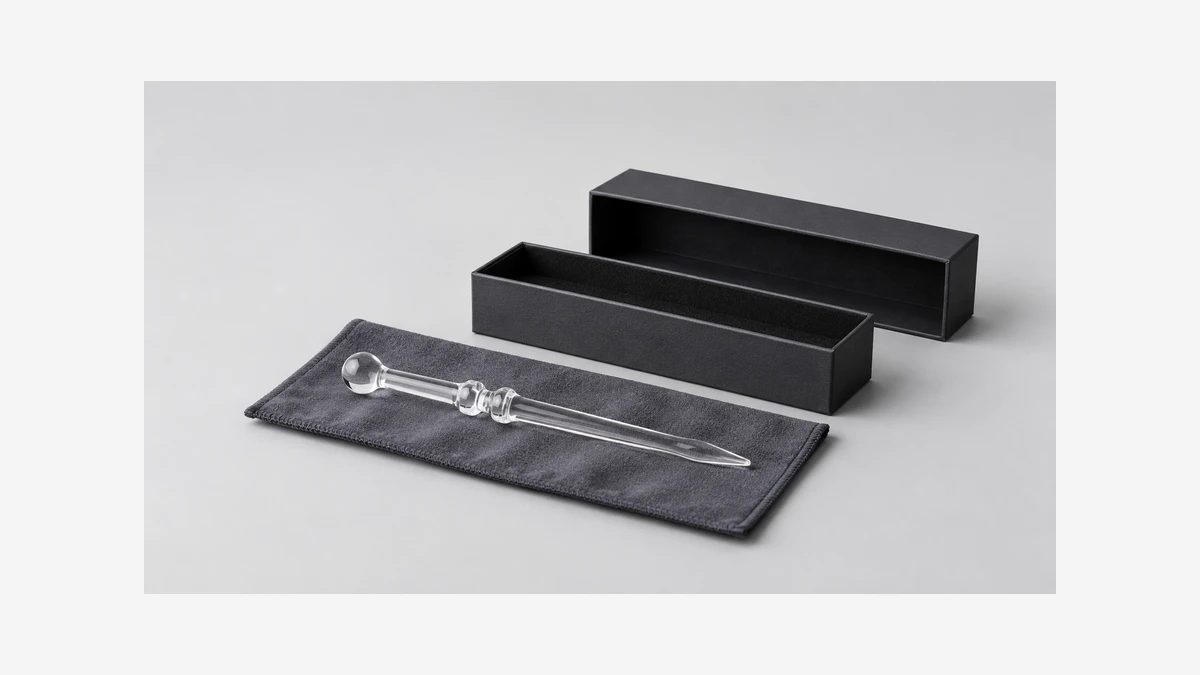
A replacement sleeve also needs its own identity. If a tool originally arrived in a fitted holder but now sits in a generic pouch, include that change in the record. It may explain why an end is no longer separated from the rest of the kit, without proving that the pouch caused any particular mark.
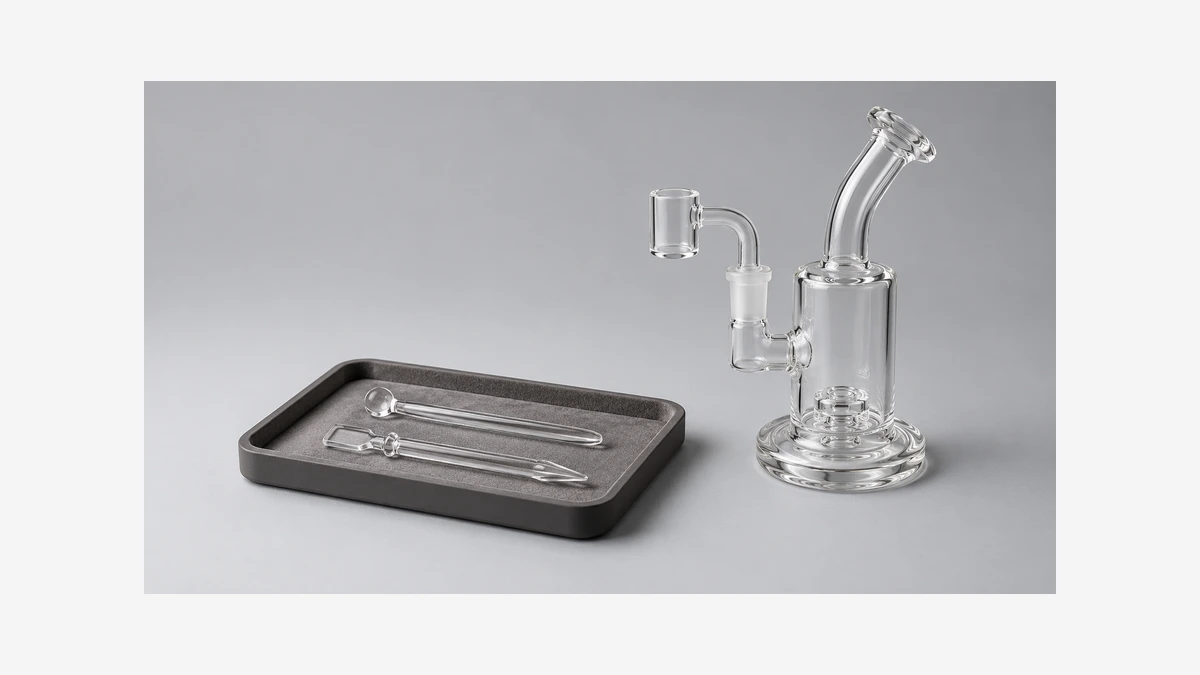
An illustrative layout can help describe the issue: a straight shaft lies along a compartment while a broad decorative end extends beyond its edge. The compartment is long enough for the shaft but does not account for the full outline. This is a geometry description, not a claim that a specific restraint or padding thickness will prevent breakage.
🧼 7. Keep tool care separate from case care
A case lining and a glass tool are different items. Instructions for glass do not automatically cover fabric, foam, elastic or an adhesive in its holder. A wipe intended for the outside of a case likewise does not become suitable for every surface of the object inside it.
Follow the actual directions for each item. If instructions are missing, ask before applying a household chemical or abrasive. This article does not prescribe a solvent, soak duration or temperature. A general material label cannot account for an unidentified finish or joined handle.
After care, keep the object identifiable as it dries according to its instructions. An opaque sleeve can hide the area you wanted to inspect. Use a storage cover for its documented purpose, without assuming it is also a drying enclosure or a way to correct a surface defect.
Where a maker supplies separate directions for a handle and a glass end, keep both sets with the item. A joined object can have more than one care boundary. Do not shorten those directions into a single remembered rule such as glass can be washed, because that loses the information about the complete accessory.
Packaging can clarify identity even when it cannot resolve condition. A label can identify the model or declared material; it cannot show whether a later chip occurred. Use the label to connect the question to the right object and the current photographs to show the present concern. Neither record should be asked to do the other’s job.
📝 8. Make the next message about one particular tool
A support message is easier to answer with the original item name, a complete photograph and the location of the concern. Ask separately about material identity, the marked area and the intended storage arrangement. That is more concrete than asking someone to declare all colored glass acceptable.
Keep the reply with the photographs. If another mark is later noticed, the record provides a comparison without relying on memory. The next step is a clear description of one object’s condition, not a scratch test, improvised repair or comparison with an unrelated accessory.