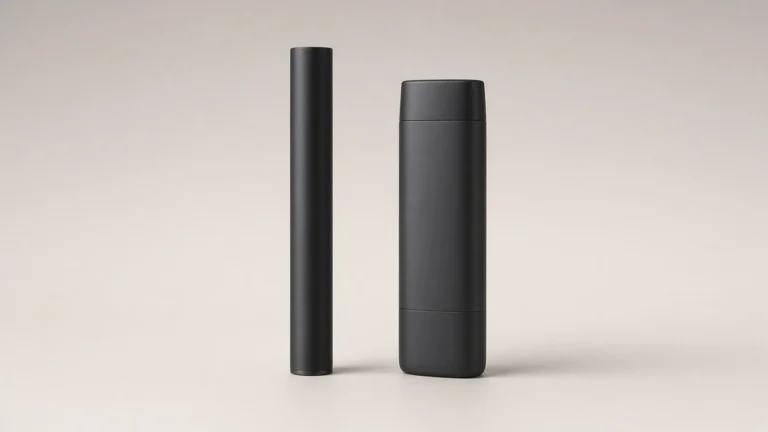
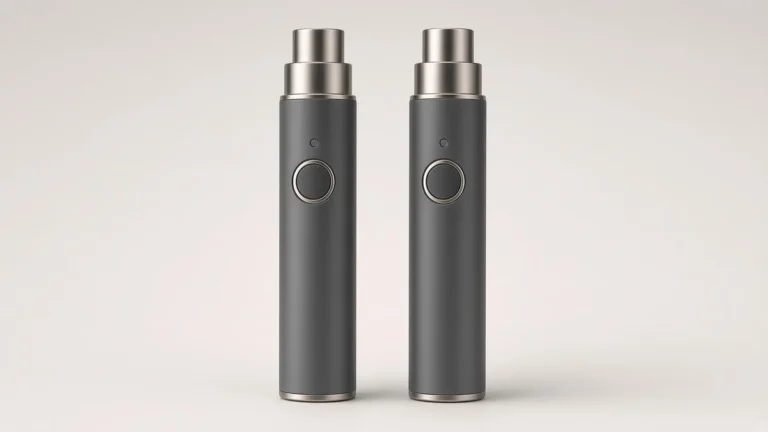
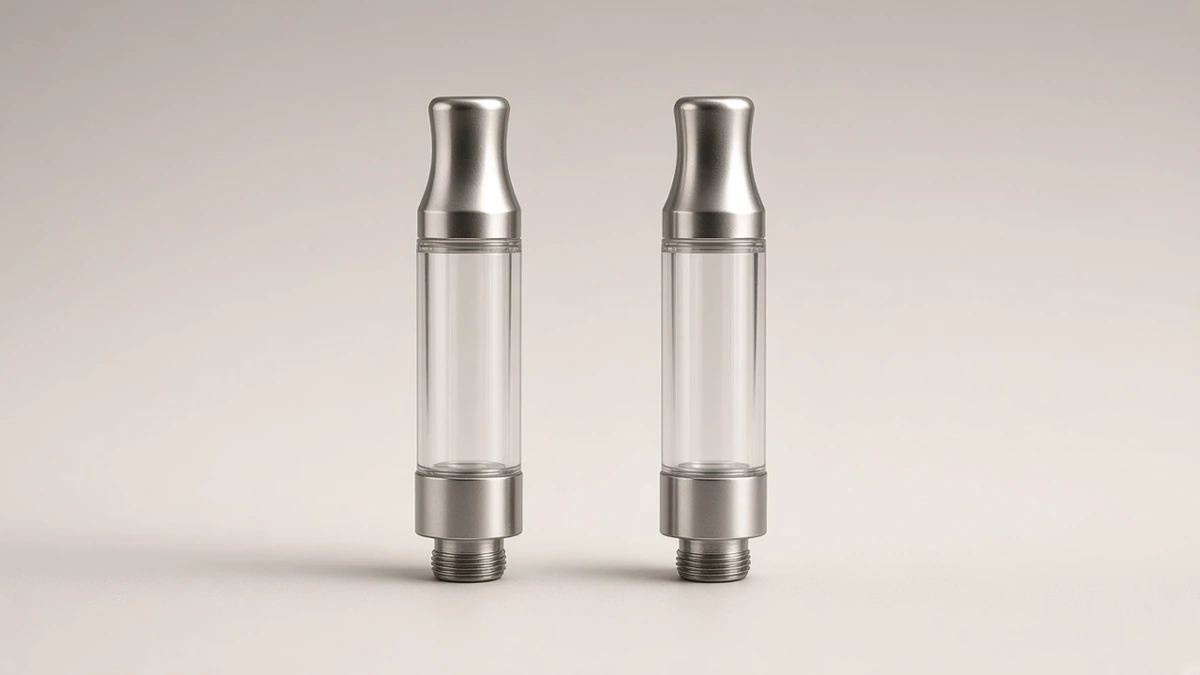
Two empty 510 cartridges can share the same outline and still close in different ways. On one version, the mouthpiece is pressed onto the tank along the axis of the cart. On another, the mouthpiece is threaded and seats by rotation. Catalog language often collapses those mechanisms into "easy press," "push-on," "snap," or "screw-on." The useful identification is the actual closure on the exact version: what motion seats the tip, what the drawing calls the parts, and how a complete closure is supposed to be verified.
That distinction matters on a filling line and in a specification. A press-fit or snap-lock top is not automatically a child-resistant locking mouthpiece, and it is not automatically a refillable closure. A photograph of a tip does not, by itself, prove force, torque, seating depth, or whether the top may be reopened after oil is in the tank. Public production guides already treat press-fit and screw-on as different installation families. The rest of this guide keeps those families apart from leak results, from child-resistance claims, and from refillability so a buyer can name the closure correctly.
🔎 1. Closure Family Is Not a Leak Result, a CR Claim, or a Refill Policy
The first cut is simple. How a mouthpiece is designed to go on is a closure-family question. Whether a filled unit leaks, whether a listing's "child-resistant" words attach to the top, and whether the cart is meant to be opened again after the first fill are different questions. They may be related in production, but they are not settled by naming the tip "press-fit" or "screw-on."
ILEVA, in a public production page titled "Vape Cartridge Capping Guide: Press-Fit vs Screw-On for Production Teams," dated 12 August 2026 on that page, treats capping as a controlled assembly step rather than the last hand motion after filling. The same page says a mouthpiece that looks closed can still be tilted, incompletely seated, over-torqued, contaminated at the sealing interface, or incompatible with the fixture used to install it. Those sentences are useful as a reminder that closure identification and finished-unit results are not the same fact. They are not a specification for any particular SKU, and they are not treated here as measured leak rates.
The same caution applies to nearby identifications already on this site. Child-Resistant Packaging or a Locking Mouthpiece: What Is Securing a 510 Cart asks which part a child-resistant claim is attached to, and notes that a standard press-fit or screw-on top may have no lock at all. Refillable Vape Cartridges: The Hardware Details Behind Leaks, Clogs, and Short Service Life asks whether a cart has an engineered fill path and a closure that can be opened and resealed without damaging the parts that keep oil contained. The present guide stays earlier: what family of closure is this version actually using?
⬇️ 2. Press-Fit and Related Axial Closures
In a press-fit, push-on, or similar axial closure, the mouthpiece is designed to seat by being moved along the axis of the cartridge, into a mating interface on the tank or the upper assembly. ILEVA's capping guide describes the primary motion for press-fit or snap-on families as axial installation, and lists alignment, support, and incomplete seating among the process concerns. A second ILEVA page, dated 9 September 2026 on that page, adds that "press-on" can describe several designs: a mouthpiece may seat by hand, lock with a short controlled press, or require a fixture.
Those public pages are also careful about vocabulary, and a buyer should be equally careful. The capping guide states that `press-fit`, `push-on`, `snap-on`, and `snap-lock` are sometimes used loosely in catalogs and should not be assumed to describe interchangeable mechanisms. A continuous compression or friction fit is not the same retention method as a ridge or undercut that mechanically engages. One design may be seated to a defined depth; another may require a locking feature to engage; a third may be governed by a supplier-specified force or displacement window. The listing word is a starting label, not the mechanism.
This site's empty 510 cartridge guide already notes that some cartridges use a friction-fit mouthpiece that presses into place, and that repeated removal can wear the seal. That is a storage and service observation. It does not, by itself, identify whether a given version is a plain friction fit, a snap-lock, or another axial design, and it does not set a force value. Those details belong on the drawing and in the supplier instruction for the exact revision.
🔄 3. Threaded or Screw-On Mouthpieces
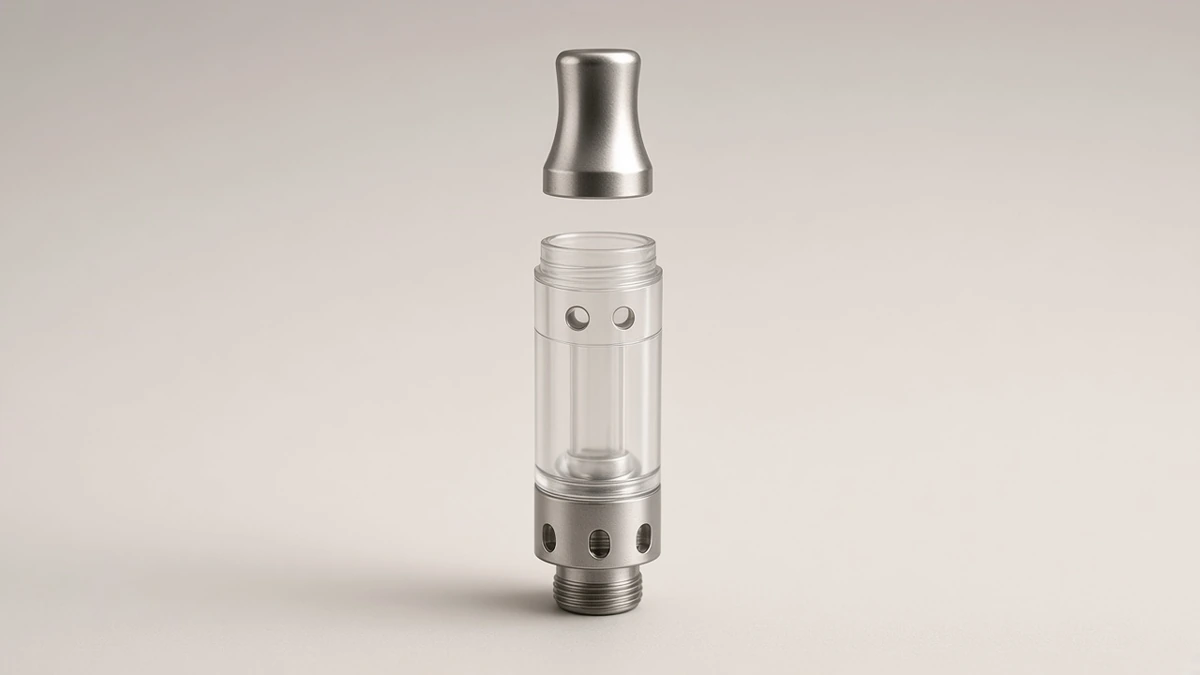
In a threaded, or screw-on, closure, the mouthpiece is designed to seat by rotation. The thread has to start correctly, and the final position or a model-specific tightening instruction is what the process is supposed to control. ILEVA's capping guide describes the primary motion as rotational installation and lists cross-threading, uneven gap, damaged threads, and an over-compressed seal among typical visible defects. The same page says that "screw-on" identifies the broad mechanism, not the acceptable torque, seal compression, or reopen policy for every model.
That last sentence is the identification point. Seeing threads on a mouthpiece, or seeing the word "screw-on" in a listing, tells a buyer which family to inspect. It does not disclose how far the thread is meant to engage, whether a tool is required at production scale, or whether the top may be backed off after oil is present. The September ILEVA workflow page makes the same cut: a screw-on description is incomplete unless the thread, seal stack, engagement, and tightening instruction are defined.
A physical sample can confirm that the mouthpiece turns onto the tank and that the seated top sits level. The sample answers a mechanical question. It does not answer a process question about torque, and it does not answer a leak question about the filled system.
🧩 4. A Snap-Lock Is Not Automatically a Friction Fit
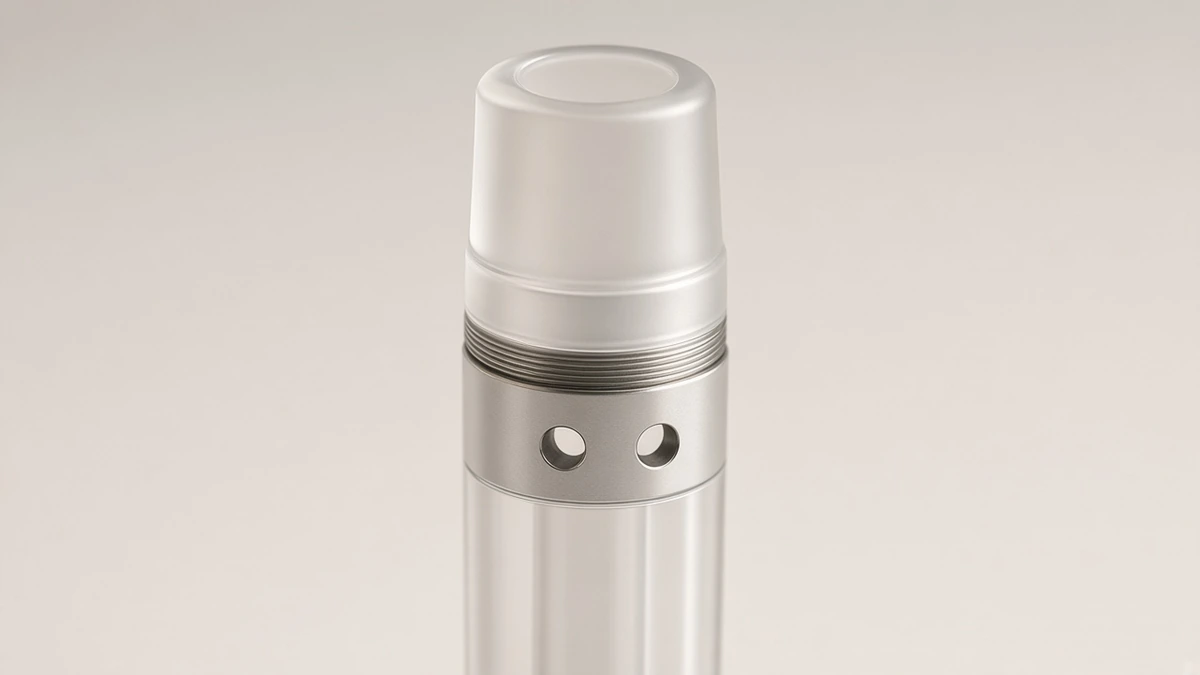
Buyers often receive mixed language for tops that all "press on." The useful second cut, after axial versus rotational, is what actually retains the mouthpiece once it has moved into place. ILEVA's capping guide separates a continuous compression or friction fit from a ridge or undercut that mechanically engages. Those are different features. A drawing that only shows a silhouette of a tip does not identify which one is present.
This is also where "locking" language has to be read carefully. The September ILEVA workflow page uses "press-on or locking mouthpiece" as a production-workflow heading for axial closures that may include a lock-engagement check. That is not the same identification as a child-resistant, two-motion mouthpiece on the cart itself, which is the hardware question in Child-Resistant Packaging or a Locking Mouthpiece: What Is Securing a 510 Cart. A snap-lock that engages during capping can still have no child-resistant second motion. A CR locking mouthpiece is not proved by the fact that the top presses on.
CBD Oil Vape Pen Design: What the Mouthpiece and Seal Drawings Should Show is the place to take a pressed, threaded, or snapped interface as a drawings question. The present guide only asks the buyer to keep those drawing labels from being collapsed into one catalog word.
🛡️ 5. Closure Family Is Not Child Resistance and Not Refillability
Once the family is named, two claims still have to stay on their own lines.
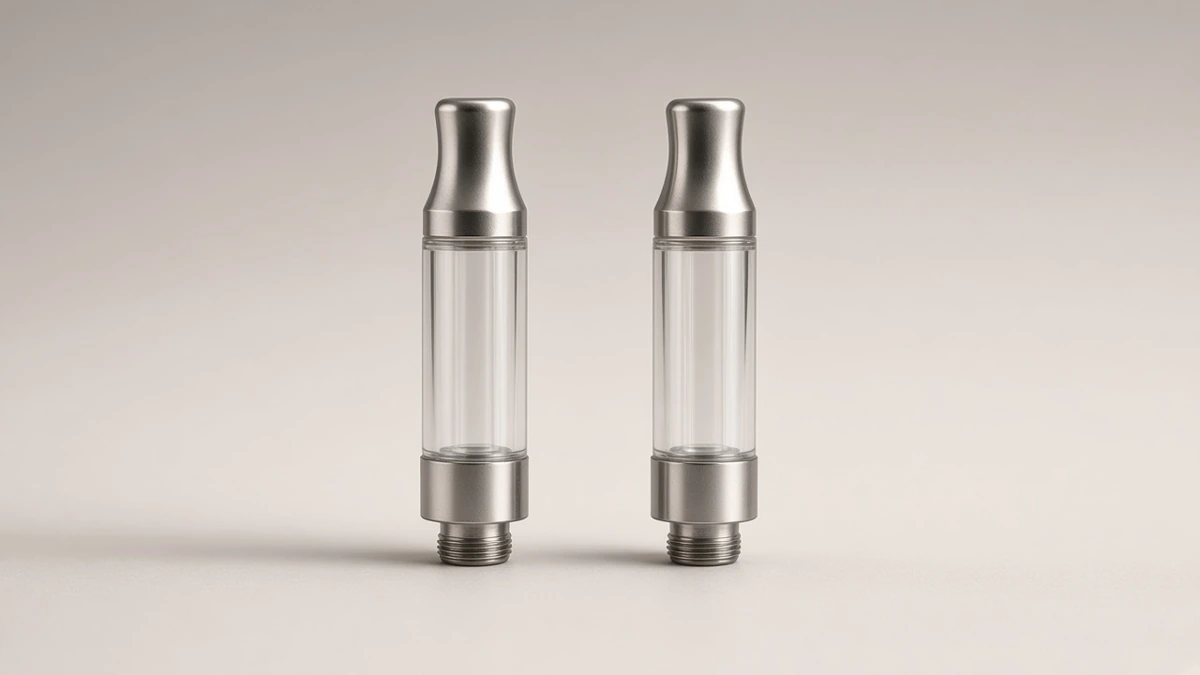
A child-resistant claim may attach to an outer tube or box, to a locking mouthpiece, or to both, or it may be used loosely for a standard press-fit or screw-on top that has no lock. That separation is already the subject of the child-resistant packaging guide linked above. Identifying today's cart as press-fit or threaded does not finish that earlier question, and a CR label does not finish this one.
Refillability is a second, separate claim. The refillable-cartridge guide on this site treats a dedicated fill path and a closure that can be opened and resealed without damaging the oil-containing parts as the test of a genuinely refillable design. ILEVA's September workflow page states, in public production language, that a closure label alone provides no proof of refillability, tamper evidence, or seal integrity, and that some locking closures are intended to be permanent once seated. Some threaded closures may be adjustable, which that page says does not automatically authorize reopening after contact with oil. A buyer who needs a reopen or rework rule should get it in the supplier instruction for the exact revision, not infer it from the family name.
Mouthpiece seating as a storage seal — whether the top sits flush and whether an o-ring is worn — remains a hardware check in the empty 510 cartridge guide. A tight press-fit can be a good storage seal and still not be a lock, and still not be a refillable system.
📷 6. What a Listing Photograph and "Easy Press" Cannot Show
A listing photograph can support an identification if the thread, the seam, or the mating interface is actually visible. Often it is not. A three-quarter beauty shot of a mouthpiece shows that a tip is present. It does not show whether the interface is a thread, a friction bore, or an undercut, and it does not show the fixture or the controlled setting used to close it.
The September ILEVA page is direct on a related marketing phrase: a statement such as "easy press" does not prove that a production operator can close the cartridge correctly without a fixture. The August capping guide is equally direct that neither closure family is automatically better, and that leakage depends on the complete filled system and the validated process, not the closure label by itself. Those are reasons to request an empty sample, a marked drawing, and the current instruction revision, not reasons to grade a tip from a photo.
A fully seated mouthpiece on a sample is also not a leak guarantee. ILEVA's capping FAQ states that a fully seated mouthpiece does not guarantee the cartridge will not leak, because fill level, cleanliness of the sealing interface, component condition, seal geometry, oil behavior, storage, pressure, and temperature can also affect the filled system. That sentence belongs in the unused-performance column of this identification guide: it is a public caution, not a test result for any cart offered to a licensed brand.
✅ 7. What to Check on a Sample, a Drawing, and a Supplier Note
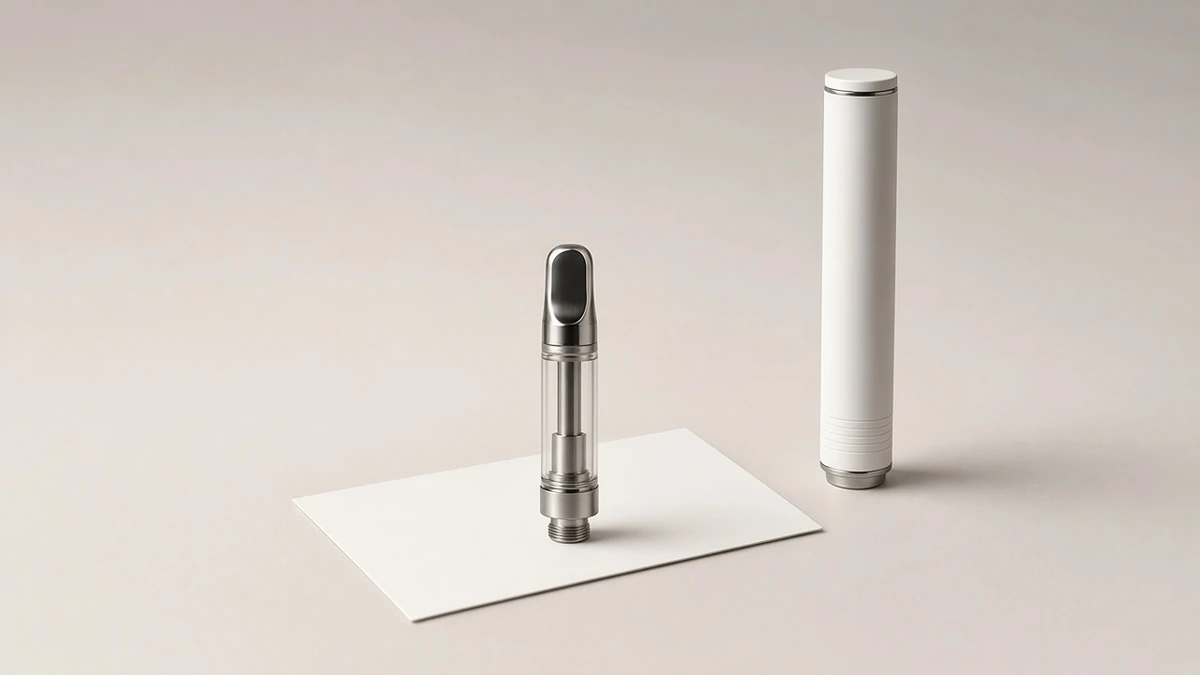
A one-line description a team can reuse should name the closure family and the verification method, not a preference. Example: "510-thread cartridge, press-fit mouthpiece; supplier instruction specifies axial seating to a marked depth on this revision; first-piece check is a level seam and the documented seated height." Or: "510-thread cartridge, threaded mouthpiece; supplier instruction specifies hand assembly to a documented final position; first-piece check is full thread start without a visible cross-thread and a level seated tip."
On the empty sample:
- Confirm whether the mouthpiece leaves the tank by a straight pull, by rotation, or by a documented second motion, without forcing a part the instruction says is permanent.
- Look at the mating interface: a smooth bore, a ridge or undercut, or a thread is a visible clue, not a complete specification.
- See whether a seal or o-ring is a separate component and whether it stays with the tip or with the tank.
- Do not use the sample as a leak test of a filled unit, and do not treat a one-motion opening as a child-resistant result.
On the drawing and the instruction:
- The mouthpiece, tank interface, and seal stack should be identified for this exact revision, not for a look-alike SKU.
- The drawing should show whether the motion is axial or rotational, and whether any snap or lock feature is supposed to engage.
- The instruction should say what is controlled — force, displacement, depth, torque, or final position — without a buyer inventing a value from another model.
- The reopen or rework rule, if any, should be written down. Silence is not permission.
On the listing:
- Treat "press-fit," "push-on," "snap," "snap-lock," and "screw-on" as labels to reconcile with the sample and the drawing, not as interchangeable mechanisms.
- Treat "easy press" as a sales phrase until the fixture and the complete-closure check are documented.
- Keep child-resistant language, refillable language, and leak claims on separate lines.
Questions worth sending with a sample request:
- Is the mouthpiece on this exact revision press-fit, snap-lock, threaded, or another supplier-defined design?
- Which component identifiers and drawing revision govern the mouthpiece and the seal stack?
- What motion seats the tip, and what observable condition counts as fully closed?
- Is a fixture, press, or torque tool required, and which surfaces may support the cartridge?
- May the mouthpiece be reopened or reworked after seating, including after contact with oil, and under what documented conditions?
- Which statements in the listing are closure-family descriptions, and which would require a test report?
A drawings-level review of the mouthpiece and seal can continue in CBD Oil Vape Pen Design: What the Mouthpiece and Seal Drawings Should Show. Inlet location, if that is a separate concern on the same sample, is covered in Bottom Inlet or Side Inlet: Where a 510 Cartridge Is Designed to Draw Air.
❓ 8. Short Answers a Brief Can Reuse
❓ 8.1 Identification Questions
How is a 510 cartridge mouthpiece closed after filling? By the closure designed for that version. Common families are an axial press-fit or snap-lock, and a threaded or screw-on tip. The outline of the cart does not, by itself, identify which family is present.
Are "press-fit," "push-on," "snap-on," and "snap-lock" the same mechanism? Not necessarily. Public production guidance opened for this article says those catalog words are sometimes used loosely. A friction fit and a ridge or undercut that engages are different retention methods and should be confirmed on the drawing.
If the mouthpiece is press-fit, is it child-resistant? Not by that fact alone. Child resistance is a separate claim that has to attach to a named part, as explained in the locking-mouthpiece guide. A standard press-fit or screw-on top may have no lock at all.
If the mouthpiece unscrews, is the cartridge refillable? Not automatically. Refillability depends on a defined fill path and a closure that can be resealed without damaging the oil-containing parts. Some instructions prohibit reopening after the tip is seated.
Does a fully seated mouthpiece prove the cart will not leak? No. Seating is a closure check. Leak behavior of a filled unit depends on the complete system and needs its own evidence.
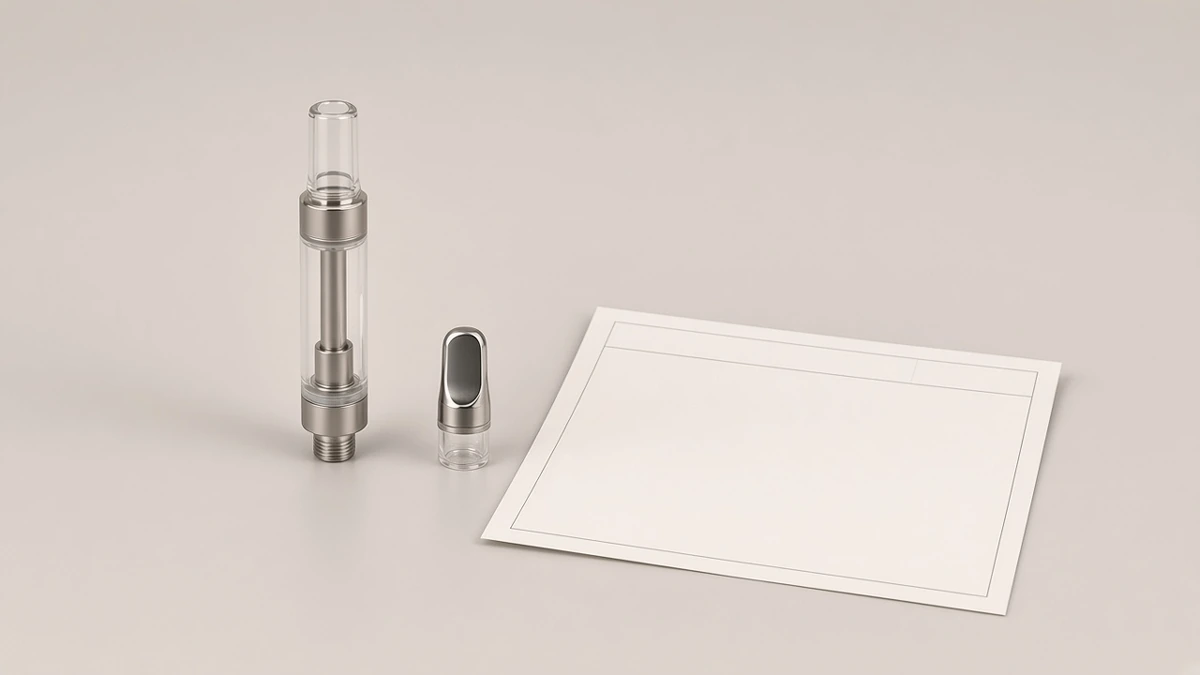
Can a listing photograph settle the closure family? It can support an identification if the interface is visible, but it often shows only the exterior of the tip. Confirm the motion and the mating feature on an empty sample and a marked drawing.