The top opens, but the lower edge still feels sticky. Or a familiar tooth row suddenly has a gap. Those are different reasons to search for information about a purple plastic grinder, and neither is answered by a color match alone. Separate the opening problem from visible damage before considering a cleaner. A damaged part needs to come out of service; an unidentified joint needs to be understood before anyone tries to free it.
🎨 1. A purple plastic grinder’s color does not identify its material
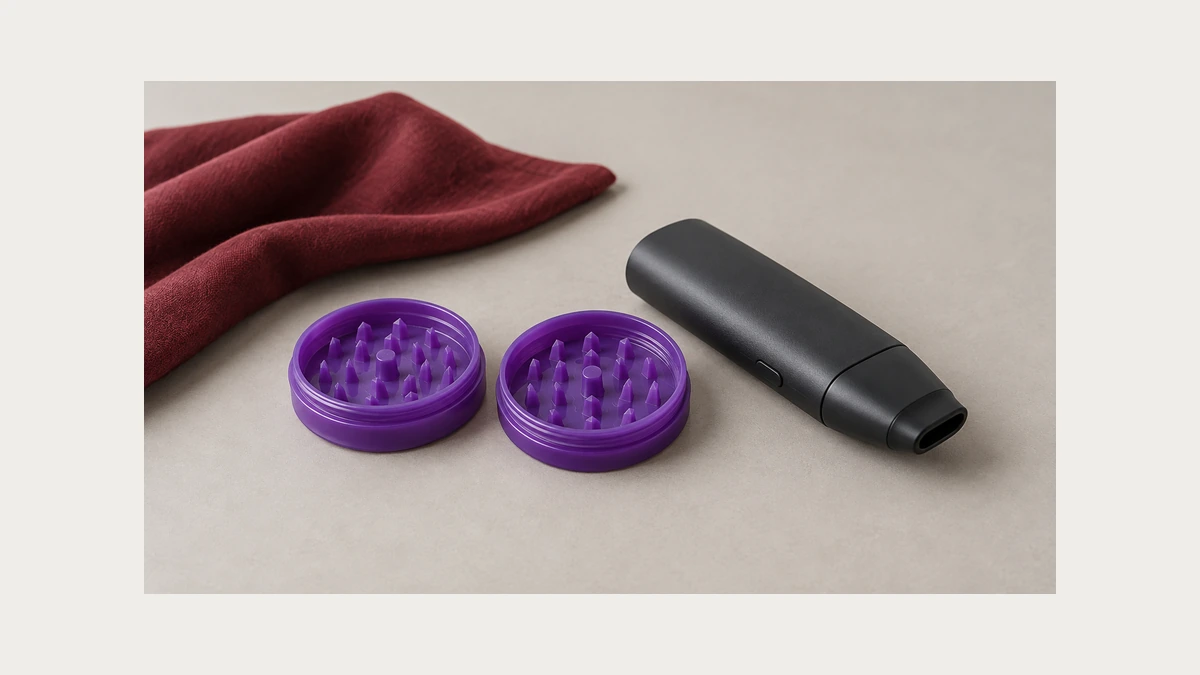
An opaque purple grinder and a translucent purple grinder can look like variations of one design. They may be entirely different objects. On an existing empty grinder, color is useful for describing the item, but it cannot identify the plastic, the finish or the joints. Look instead at the separate pieces, the visible tooth rows and the edge where the lid meets the body. Those are the details that explain a complaint about sticking or missing parts.
A tooth row may appear continuous with its supporting floor, or there may be a visible boundary around a separate insert. Describe that boundary without treating it as proof of the manufacturing process. Matching colors do not establish a one-piece molding; a contrasting ring does not establish an adhesive joint. If a tooth has moved or a ring has lifted, that visible change is more useful than guessing how the assembly was originally made.
A deep purple shell is not evidence of acrylic, and a translucent one is not evidence of polycarbonate. A color description supplies no material specification. The same limitation applies to a seller’s photograph of an apparently identical object: similar appearance is a starting point for identifying a model, not confirmation that two items have the same resin, finish, cleaning instructions or replaceable parts. Keep any original packaging or identifiable maker information with the empty hardware.
A plastic-bodied grinder also needs to be distinguished from a metal grinder with a decorative resin top. On the latter, the visible decoration and the working teeth may be different components. Our guide to resin grinder tops and working surfaces addresses that distinction. Here the question is the condition of the existing plastic-bodied grinder, particularly the openings, teeth and rim.
🔍 2. Find the actual opening before treating it as a jam
Before assuming a grinder is jammed, confirm which joint the maker intends to open. A shallow two-part design and a stack with a separate collection floor do not have the same layout. A line around the wall might be an opening, a molding mark or the edge of a label. Its presence alone is no instruction to twist, pull or pry there. If the intended opening is unclear, identify the design before applying more force.
An owner in a May 2026 discussion about an inaccessible grinder could not find the expected chamber access. Commenters proposed a seam hidden by the exterior graphic, while the owner later reported no split at the suggested location. That exchange is useful because it exposes an identification problem. It does not validate removing a screen or cutting the graphic to find an opening on another grinder.
A sticker can conceal part of an object without proving that a serviceable joint lies underneath it. There is no need to turn an identification question into a blade or leverage experiment. Compare the complete empty object with the maker’s parts photographs first. A picture of the underside can be more informative than another view of the decorative top, particularly when the suspected opening belongs to a lower chamber rather than the lid.
Piece count describes the layout, not how easy an unfamiliar object will be to open. The two-piece grinder layout has fewer separate chambers to distinguish, but a stubborn joint still needs its own identification. Name the upper lid, the toothed section and any separate lower compartment you can actually verify. Do not add a screen or collection chamber to the description merely because another grinder has one.
It helps to keep the outside grip and the inside closing surface distinct in your description. A sticky outer wall is where the hand meets the object. A dirty rim is where two pieces meet. Cleaning the grip may change how the outside feels without addressing the rim, and a clean-looking top photograph may not show the lower joint at all. Name the location instead of calling the entire grinder sticky.
🦷 3. Separate tooth damage from residue at the edge
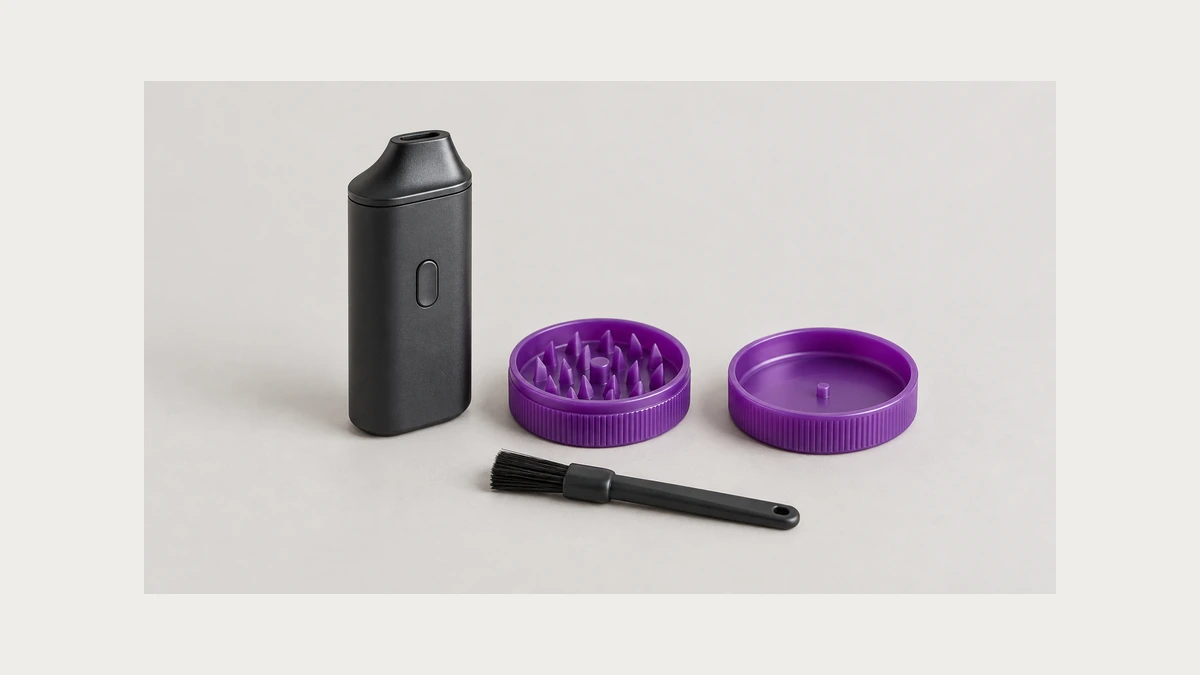
A dark lump on a tooth and a missing tooth tip are different observations. Look without running a finger or a sharp tool across a questionable edge. A clear photograph from above and another from the side may show whether the profile is interrupted, although residue can still obscure the surface. If damage is visible, take the grinder out of service. Cleaning is not a way to restore a broken tooth or establish that a questionable edge is intact.
A May 2026 post about broken plastic grinder teeth attracted explanations ranging from material quality to handling. The photograph and replies did not establish a cause or a measured service life. The useful owner question is narrower: which part of this particular empty grinder is missing or displaced? There is no need to settle a debate about every plastic grinder before recognizing damage on the one in front of you.
In an April 2023 discussion, the original poster confirmed a plastic connection had come apart after commenters debated why contents had spilled. Other replies described separate experiences with chipped teeth. These are different failure reports. A separated floor, a loose tooth ring and a chipped tip should not all be described as the same problem, and the thread supplies no comparative failure rate for any material.
What is useful, in both cases, is separating the two kinds of damage in your own notes before trying to describe the problem to anyone else: is a tooth missing, or is a tooth simply dirty? Those call for different next steps, and conflating them tends to produce advice aimed at the wrong problem.
🧪 4. A metal-grinder cleaning recipe may not apply
Cleaning instructions written for metal grinders circulate widely, and isopropyl alcohol soaks are probably the most common version. Metal and plastic don’t necessarily respond to solvents the same way, and a routine that’s safe for one material isn’t automatically safe for the other. This isn’t a claim that alcohol will damage every purple plastic grinder; it’s a reason not to assume a metal-grinder routine transfers without checking.
A concrete counterexample to universal alcohol advice appears in Storz & Bickel’s manual, section 8.5. For its own Herb Mill, the maker prohibits placing it in isopropyl alcohol and specifies warm rinsing water. That instruction belongs to that accessory. It demonstrates why a generic solvent routine cannot replace the instructions for an unidentified purple grinder; it does not authorize water, a dishwasher or another cleaning method for a different product.
The finish also belongs in the care question. A shiny exterior, printed graphic and working tooth surface may require separate consideration even on one item. The parallel issue in ceramic-coated grinders is distinguishing the surface from the material underneath. When the maker has not identified a surface or approved a cleaner for it, repeating a cleaning cycle with a stronger solvent adds another unknown rather than resolving the first one.
🧩 5. Check the lid, floor and loose small parts separately
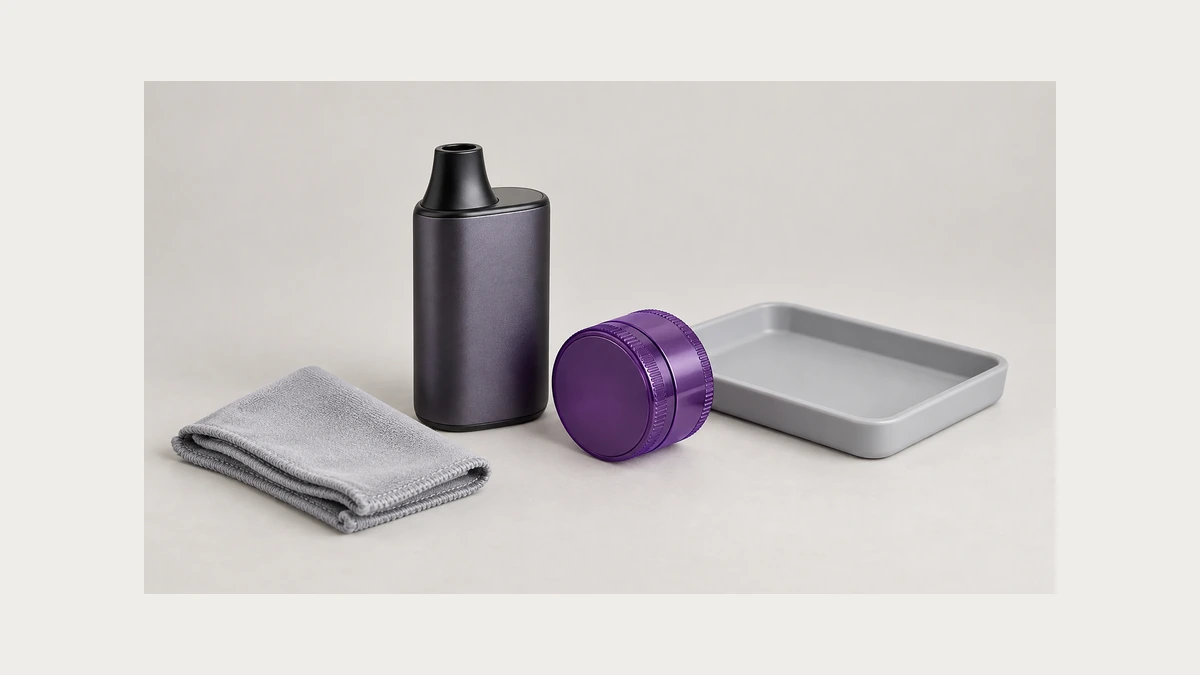
Not every purple grinder is a tall stack, and not every stack contains the same small parts. Some consist of two shallow halves. Others have a separate floor or screened compartment. Start with the layout you can verify, keeping removable parts that are already identified together on a clear surface. A loose ring or small disc should not be assumed to be spare simply because its position is not immediately obvious.
Pay particular attention to the difference between an outer lid and a lower floor. A lid that stays in place does not establish that a separate floor is secure. Conversely, an intact lower compartment says nothing about the teeth above it. Looking at each identified part on its own makes it easier to notice a missing rim section, an opening that no longer sits evenly, or a loose component that previously remained fixed.
A damaged connection is not a prompt for an adhesive repair. Keep the item out of service while the maker identifies whether the affected part is replaceable. The issue is preserving the intended assembly, not making an unknown glue appear to hold. If service information is unavailable, stop there rather than borrowing a repair from a different object with a similar shape. Record what separated and keep any already detached hardware apart from clean accessories.
After a permitted cleaning process, compare the same identified surfaces rather than a different photograph taken under different lighting. An unchanged pale line is not automatically proof that a cleaner failed: the original assumption that it was removable residue may have been wrong. Stop repeating the process if the surface changes unexpectedly. Keep the original care instruction, the actual product identity and the observed change together when seeking help.
👁️ 6. Keep wear observations separate from health guesses
Describe a dark mark as a dark mark until there is enough information to say more. A photograph may show its location and extent, but it cannot establish chemical composition. A newly visible pale line may be a scratch, residue or an indication of damage; uncertainty should remain in the description. Avoid scraping it to make the diagnosis more dramatic. An unresolved surface change is a reason to pause and obtain product-specific guidance.
Across the threads already mentioned, a recurring pattern shows up: someone posts a photo of residue, breakage, or discoloration, and the replies drift quickly from “here’s what I see” to speculation about material quality, safety, or what the wear implies about the grinder more broadly. None of those speculative replies amounted to a verified diagnosis, and none were backed by anything beyond the same photograph the original poster shared. A thread full of confident guesses is still a thread full of guesses.
Useful notes keep observation and explanation apart. ‘One tooth is visibly shorter than the neighboring row’ describes a comparison someone else can examine. ‘The plastic was defective’ assigns a cause that may need evidence unavailable to the owner. You can make a sensible decision to stop using damaged hardware without making an unsupported medical or engineering claim. This distinction also keeps a service conversation focused on the affected part instead of a broad argument about materials.
📝 7. When a clear description is more useful than another solvent
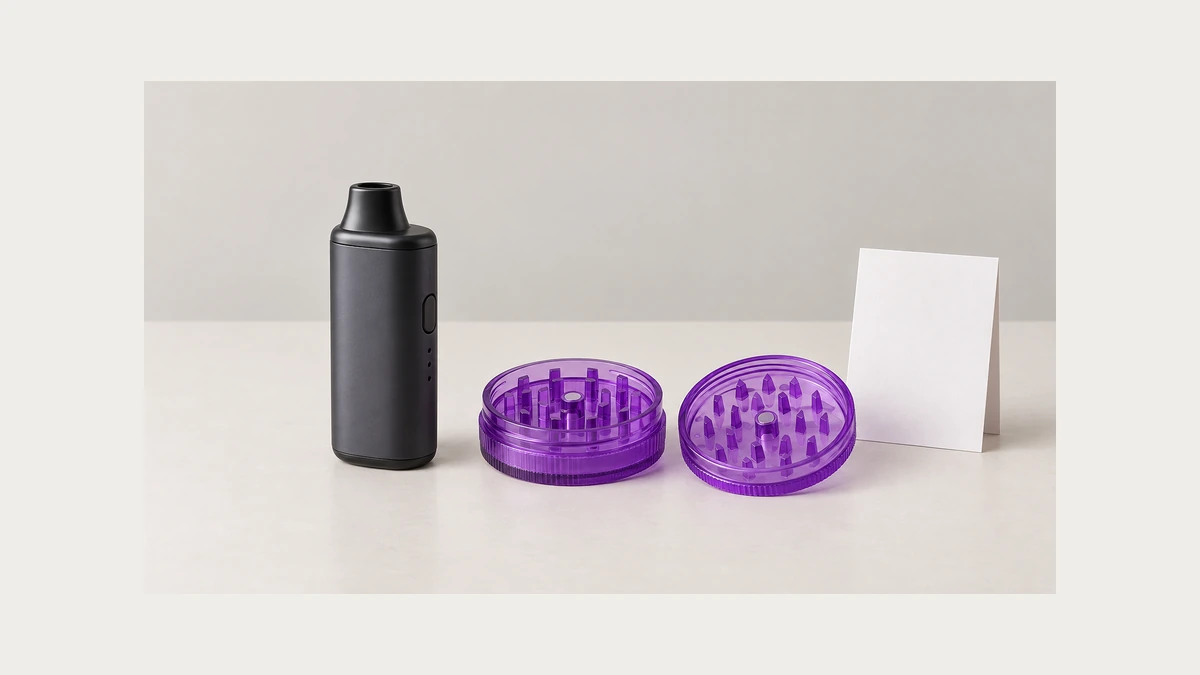
For a grinder that’s already sticky, damaged, or hard to open, reaching for another cleaning product or another workaround isn’t always the next useful step. A more productive one is writing down, specifically, what the piece actually shows: whether the body is opaque or translucent, whether the teeth look molded-in or inserted, which teeth are affected and how, where the residue sits, and whether resistance comes from the lid, the screen, or the floor piece.
That description does something a repeated solvent cycle doesn’t – it stays accurate regardless of what’s tried next, and it transfers cleanly to anyone else looking at the same problem. A grinder with one chipped tooth and clean threads is a different object, practically, from one with an intact tooth ring and a stuck floor piece, even if both get described loosely as “a purple grinder that doesn’t work right.” The more precisely that difference gets written down, the less guessing anyone has to do afterward, including the owner.