A silicone pipe with glass bowl and lid can have a cover over the bowl, a cover over a separate compartment, or both. Find the opening the lid actually belongs to before treating a loose cover as a bowl-fit problem. The small parts can share a color and still have entirely different jobs. On an existing empty piece, the most useful first distinction is between the glass insert, the socket supporting it and any separate covered cavity.
🔍 1. A silicone pipe with glass bowl and lid can have separate openings
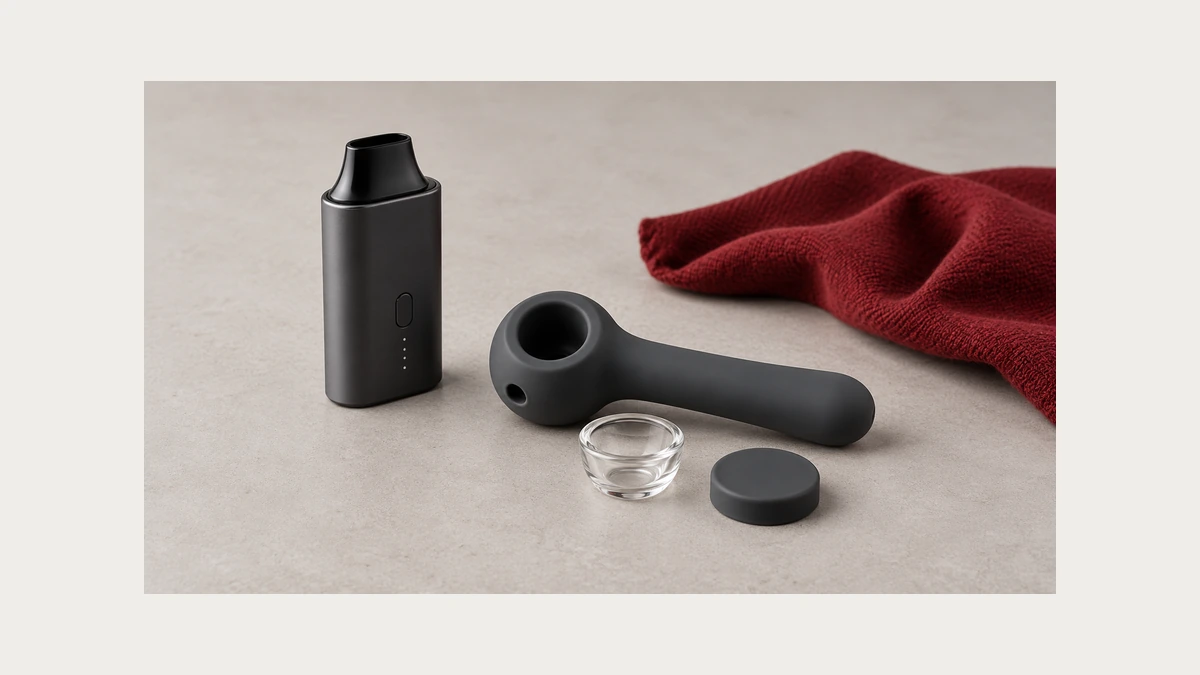
The glass bowl and a lid are different components. The bowl is an insert seated in the body; a lid closes an opening. Depending on the design, that opening may be above the bowl or underneath a separate compartment. Neither arrangement should be assumed from the phrase ‘with lid.’ A product photograph showing the underside can settle a question that a top view leaves completely unanswered.
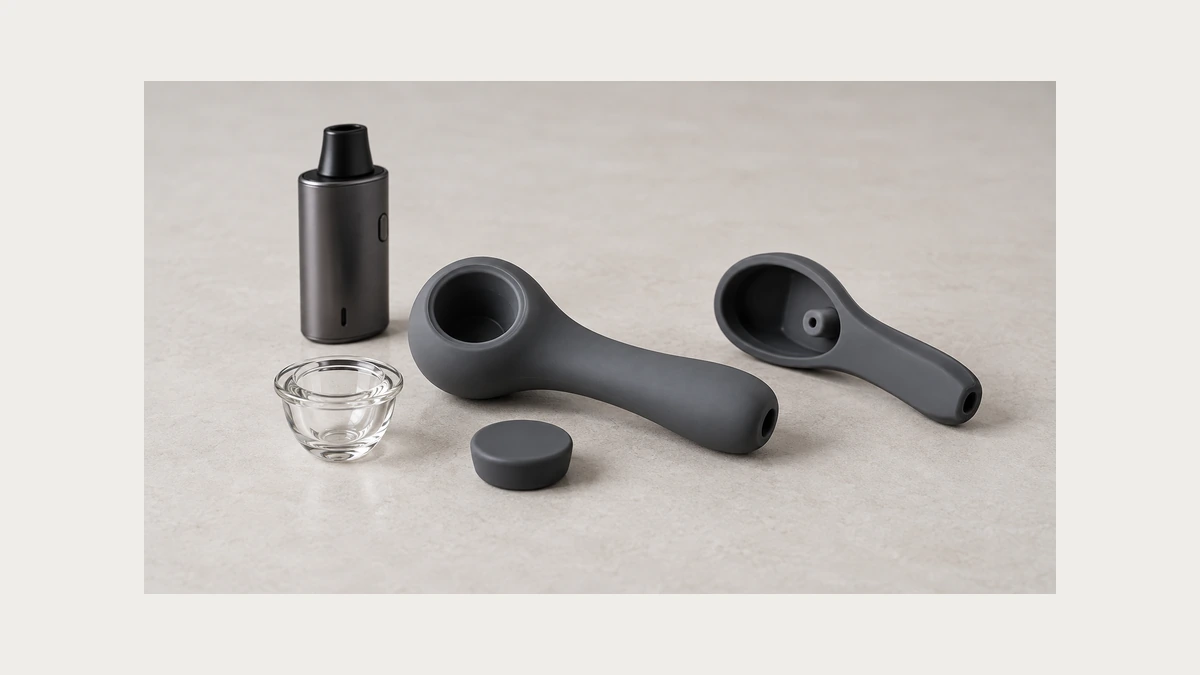
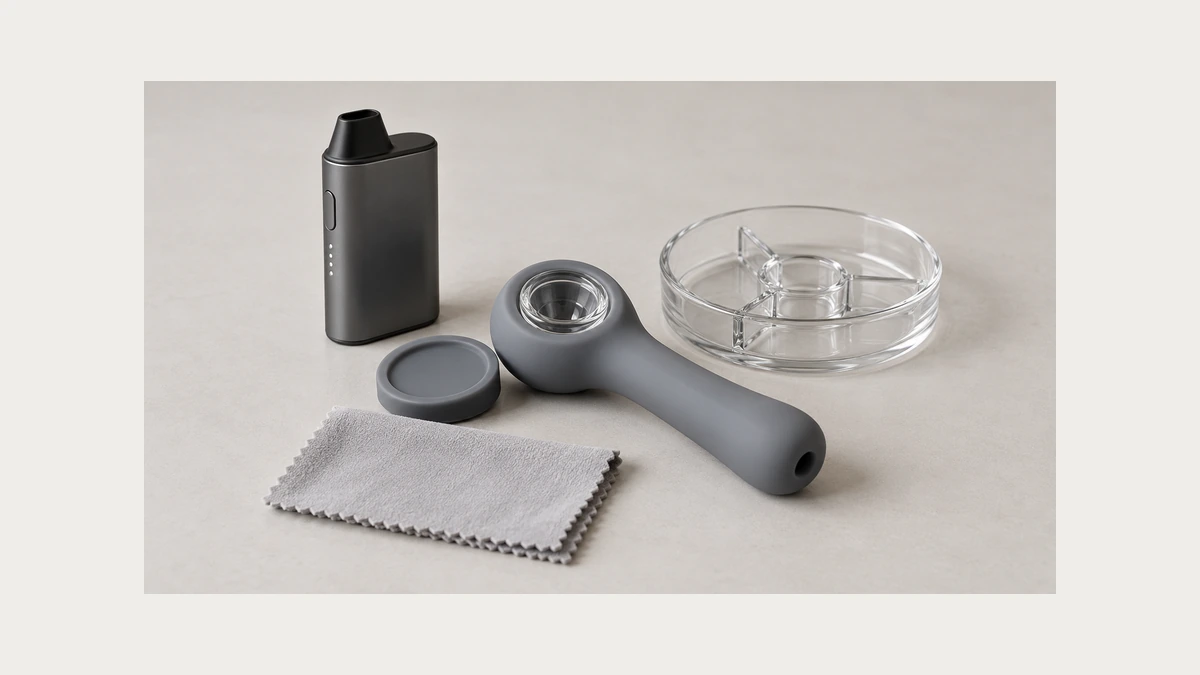
One maker’s own product listing for a spoon-style piece lays the parts out plainly: a silicone body, a separate glass bowl, and a stash-container lid are described as three distinct components. That short, maker-specific example is useful mainly because it shows the pattern clearly — a lid closing a storage cavity is not the same feature as the glass bowl, even on a single-piece body where everything is molded from the same color of silicone.
Use the maker’s parts illustration to locate the intended covered opening. There is no reason to remove glass merely to prove that another cavity exists. If the part is already detached according to its instructions, keep it separate while identifying the remaining openings. A cover sitting beside the pipe is not proof that it fits the largest visible hole; its rim and the maker’s identification need to agree.
🧩 2. Map the body, insert, cover and underside compartment
A useful parts map starts with the body and the glass insert, then adds only features actually present: a bowl cover, an underside compartment, a compartment cover, perhaps an integrated tether. These are names for identified features, not a four-part recipe that every pipe follows. A one-piece body can contain several openings, while a seam in that body does not necessarily mean the body is intended to split apart.
Consider two empty pieces that look similar from above. One has a small round cover directly over the glass insert. The other has an uncovered insert and a cap underneath the broad end of the body. Asking for ‘the lid’ would describe two different parts. The second piece’s underside opening is the important clue; its top view could be mistaken for a pipe whose bowl cover is missing when no such cover belonged there.
The opening provides a reference for a missing part. Record whether it sits above the bowl, underneath the body or at the end of a separate cavity. A tether or molded recess may help describe the arrangement, but it does not establish that an arbitrary lid is compatible. Keep replacement identification tied to the actual model. Similar color, approximate diameter and a flexible feel are not enough to confirm a match.
There is another useful distinction between an insert’s rim and its underside. A close-up showing only the circular top may hide the shape that actually sits in the socket. If the intact insert is already removed under the maker’s instructions, a side view can document that shape without forcing a trial fit. For chipped glass, leave the handling and measurement question to the appropriate service provider. A matching top outline alone does not confirm the complete insert.
⚙️ 3. A loose glass insert and a loose lid are different faults
Once the parts are mapped, separate the two complaints: the glass moves in its socket, or the lid will not sit as expected. They concern different contact surfaces, even if they occur on the same piece. Fixing one area cannot be assumed to resolve the other. Describe each observation at its own opening rather than treating the presence of a loose part as a diagnosis of the complete body.
A glass insert that rocks or sits unevenly needs its own assessment. That observation alone cannot tell you whether the insert is incorrect, the socket is affected, residue is obstructing the seat, or another part is missing. Do not stretch the socket or press harder to make an unknown insert fit. Set the item aside while its correct assembly is confirmed. Glass that is chipped or cracked is a separate damage issue, regardless of the lid’s condition.
A cover can sit unevenly at its own rim while the glass insert remains correctly identified. Look at the visible edge and any intended tether without forcing the cover closed. Is part of the rim folded inward? Is something lying across the opening? Is the cover itself split? These are observations about the closure. They do not establish a cause, and a neat-looking closure is not evidence of a certified seal.
Keep the two complaints separate when asking for service: ‘the glass insert moves in its socket’ versus ‘the underside cap does not sit flush.’ A response about a bowl insert cannot resolve an unidentified compartment cap. Clear naming also prevents a diagram of one opening being mistaken for instructions to pry apart another. Follow only the disassembly intended for that exact piece, rather than treating every join as removable.
🧴 4. Lint and rim residue can hide at the closure
Around an identified removable insert, the boundary between glass and body is worth looking at during the maker’s approved care process. At a cover, look at the closing lip and the shallow recess beside it. Either area can hold visible debris. Its location matters more than a guess about its composition. A fiber crossing a lip is a different observation from a dark mark behind the glass, even when both are described loosely as dirt.
A March 2026 discussion of improvised silicone covers included an owner’s observation about pocket lint. That is a useful question about a closure surface, not proof that repurposed travel-bottle covers fit smoking hardware or contain odors. An apparent fit in a photograph does not establish material suitability, clearance from the glass or the care requirements for either object. Use the intended part rather than treating the improvisation as a recommendation.
Dark-colored parts and tinted glass can make a boundary difficult to see. Better lighting may help locate a mark, but an unfamiliar brown or black area should not automatically be called residue: the material itself may be colored. Compare it with an original clear product image where available. Do not use an increasingly aggressive cleaner merely to make a tinted surface look like clear glass.
A lid can also be present but parked away from its opening, for example on an intended tether. A photograph may then resemble a pipe missing its cover. Record where the attachment belongs before assuming the small part is an extra tool or a plug for another opening. That simple distinction helps explain why two photographs of the same model can appear to show different part counts.
🧼 5. Separate the glass care instructions from the silicone ones
Because the bowl and the body are different materials, they generally call for different care, and conflating the two is one of the more common mistakes owners make with this style of piece. One maker’s own cleaning guide lays out the separation directly: remove the glass bowl and clean it separately from the body, using an approved cleaner for the silicone itself, then rinsing and drying both parts before reassembly. That’s the extent of what the source specifies — a material split, not a universal solvent endorsement or a set of operating instructions.
Beyond that, general online discussion about cleaning silicone pipes tends to produce mixed opinions — some owners favor soap and water, others mention alcohol, boiling water, or acetone, and there’s rarely agreement on which is actually safe for a given piece. Silicone formulations and glass compositions vary between makers, so a method that one source confirms for its own product line doesn’t automatically transfer to a different piece, even one that looks similar. When a maker publishes specific care instructions for its own part, those instructions are the more reliable reference for that part — general suggestions gathered from scattered discussion are not a substitute, and a method that’s fine for one silicone compound isn’t necessarily safe for another. The safest approach with any unfamiliar component is to treat it as a question mark rather than assume it shares the same tolerances as the glass bowl next to it. Readers working through hidden seams on a related silicone piece may find the breakdown in this guide on removable parts and hidden seams in silicone bubblers useful for the same reasoning applied to a different shape.
📦 6. Closed storage still needs dry parts and clear space
After approved cleaning, allow the parts to dry as the maker directs before closing or reassembling them. A cover lying open shows more of its rim and recess than a closed one. Take that opportunity to confirm that no visible moisture or loose debris remains in the area you can inspect. Closing the lid is not itself a drying method, and a dry exterior does not prove that a covered recess is also dry.
Keep objects from pressing against the cover while storing the empty piece. A drawer full of loose tools can push a cap sideways or bear against exposed glass even if the drawer itself closes easily. Our guide to caps over mouthpieces and joints examines related closure and moisture questions for different hardware. Those cap shapes are not substitutes for the specific lid on this piece.
A lid is also not a protective case. It may leave the mouthpiece, underside or glass rim exposed, depending on its actual design. Nor does the presence of a lid establish odor containment, permission to close it over hot parts or a method of extinguishing anything. This is an identification and storage question for cold, empty hardware; closure appearance cannot supply approvals that the maker has not provided.
🏷️ 7. Describe the missing part by its opening, not just its color
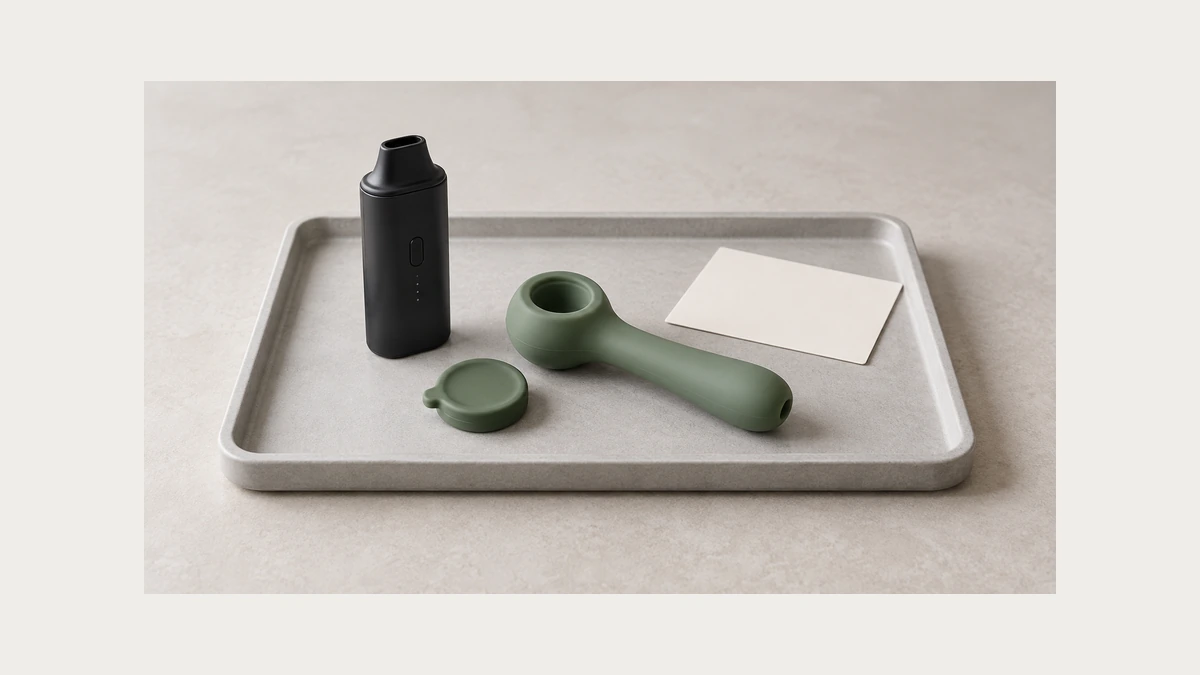
When a piece is missing a part, identify its opening before its color. A matching color can help describe the item, but it does not distinguish the bowl insert from a compartment cap. A top view and an underside view of the same piece may answer different questions. Use both where they can be obtained without handling damaged glass or dismantling an unidentified assembly.
A more useful description names a glass insert for the bowl socket, a cover over the bowl or a cap underneath the body. Those descriptions do not prove compatibility, but they identify the question that needs answering. The broader distinction between glass and silicone components in mixed-material hardware applies to another shape; it supplies no replacement dimensions for this pipe.
For a missing lid, a useful service photograph shows the whole empty piece, the uncovered opening and the separate cover if you still have it. Keep questionable glass undisturbed and leave inaccessible cavities alone. Identify whether the request concerns a bowl cover, underside cap or glass insert. Once that distinction is clear, the next question can be about the correct part and its care, rather than another guess based on color.