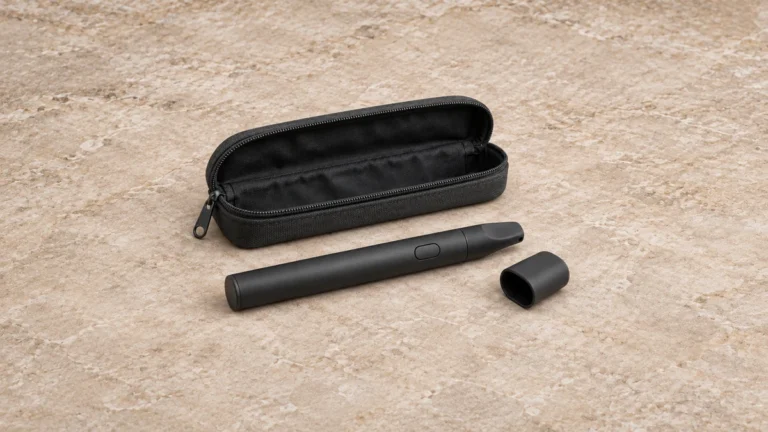
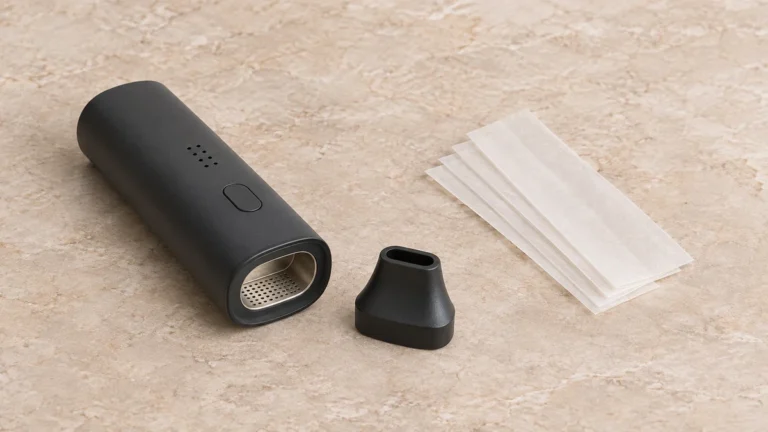
A dry herb vaporizer has to give the user a place to draw, and that place is not always a single mouthpiece. On some versions the intended interface is the native mouthpiece that ships on the device: a removable cap, stem, or built-in mouthpiece through which vapor leaves the oven path. On others the version also specifies a water-pipe adapter, a part designed to connect the vaporizer to a water-pipe joint so the draw happens through the glass, not only through the native mouthpiece. Those two interfaces are easy to collapse into a single catalog phrase such as “glass stem,” “water pipe compatible,” or “works with a bong.” They should not be. The native mouthpiece and a water-pipe adapter are different interfaces. A brief that names only a stem, or only a compatibility claim, is incomplete if it does not say which interface is specified, whether both are included, and on which version.
That distinction is not the same as the cooling parts that sit in the top path, and it is not the same as how the oven is filled. Cooling Unit or a Glass Stem: What Comes Off the Top of a Dry Herb Vaporizer already identifies the top-path parts that come off for cooling and cleaning. Top-Load Oven or a Side-Load Door: How a Dry Herb Vaporizer Is Filled already treats the loading path. This guide does not retell those subjects. It stays on two draw interfaces that still have to be named on their own: the native mouthpiece, the water-pipe adapter, and what a listing photograph cannot prove.
🔎 1. The Water-Pipe Adapter and the Native Mouthpiece Are Not the Same Interface
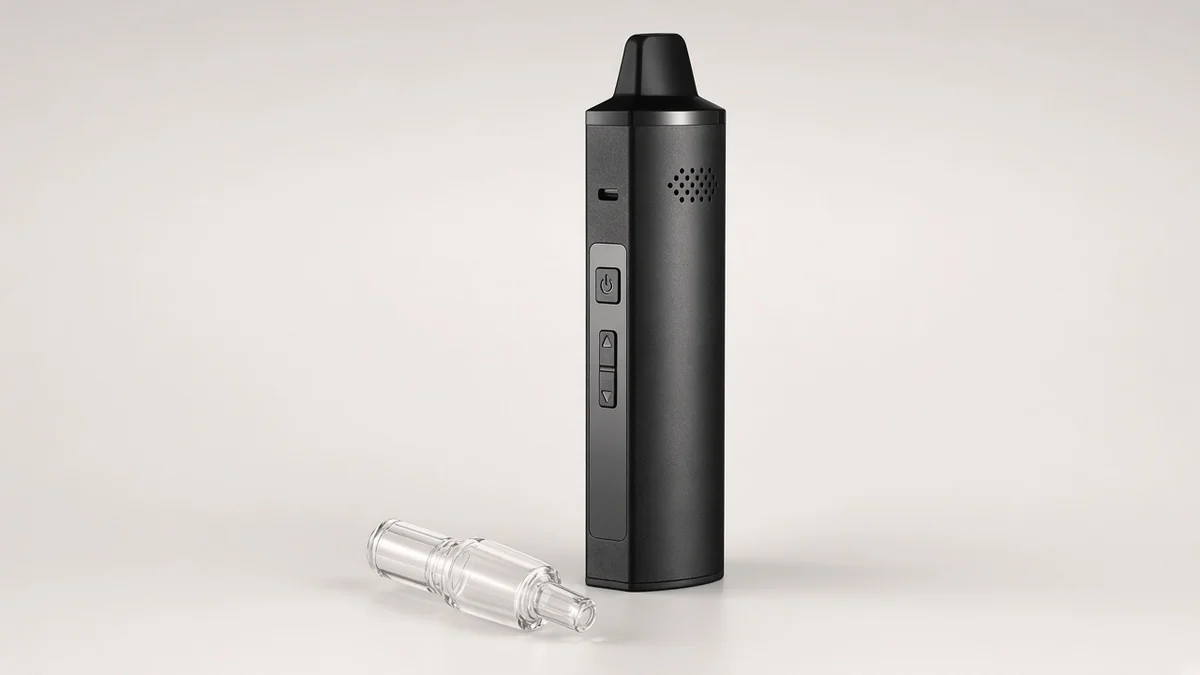
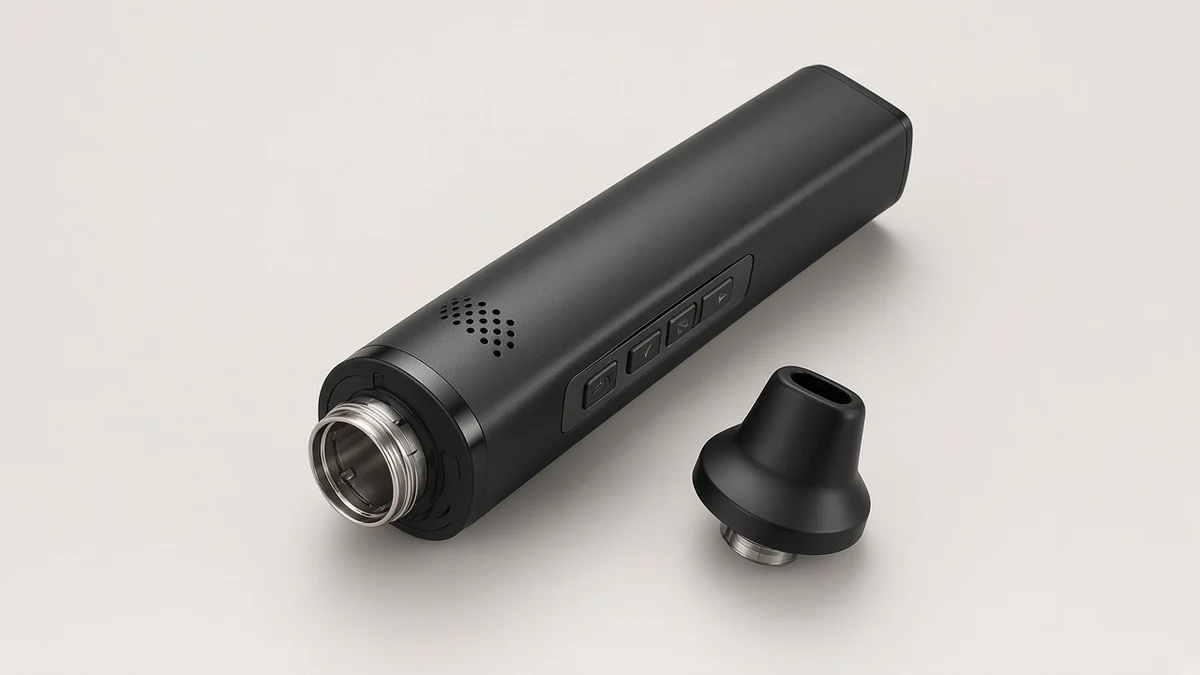
The first cut is simple. The native mouthpiece is the draw interface the version treats as the part you draw through when the device is used on its own. It may be a removable plastic or glass mouthpiece, a stem, or another documented top part, and it may also be part of a cooling-unit stack. A water-pipe adapter is a part, or a documented interface, designed to connect the vaporizer to a water-pipe joint so vapor can be drawn through that glass path. One is the device’s own mouthpiece. The other is an adapter to a separate water pipe. They can both be present on the same version, and they can be omitted or substituted independently.
A “glass stem” label does not identify a water-pipe adapter. A “water pipe compatible” label does not identify the native mouthpiece, and it does not prove that an adapter is included. A photograph of a vaporizer standing next to a glass piece does not prove either interface. Two devices can share a removable mouthpiece and still differ on whether a water-pipe adapter is part of the version, sold separately, or not specified at all. Do not assign both interfaces from one compatibility phrase.
The cooling-unit or glass-stem stack is a third identification again. Cooling Unit or a Glass Stem: What Comes Off the Top of a Dry Herb Vaporizer already treats those top-path parts. A glass stem can be the native mouthpiece. It is not automatically a water-pipe adapter. This guide does not retell that part stack. It only asks the buyer to write the native draw interface and the adapter interface as their own lines, including whether both are used and how they are connected.
🏷️ 2. A “Water Pipe Compatible” Label Is Not a Complete Draw-Interface Specification
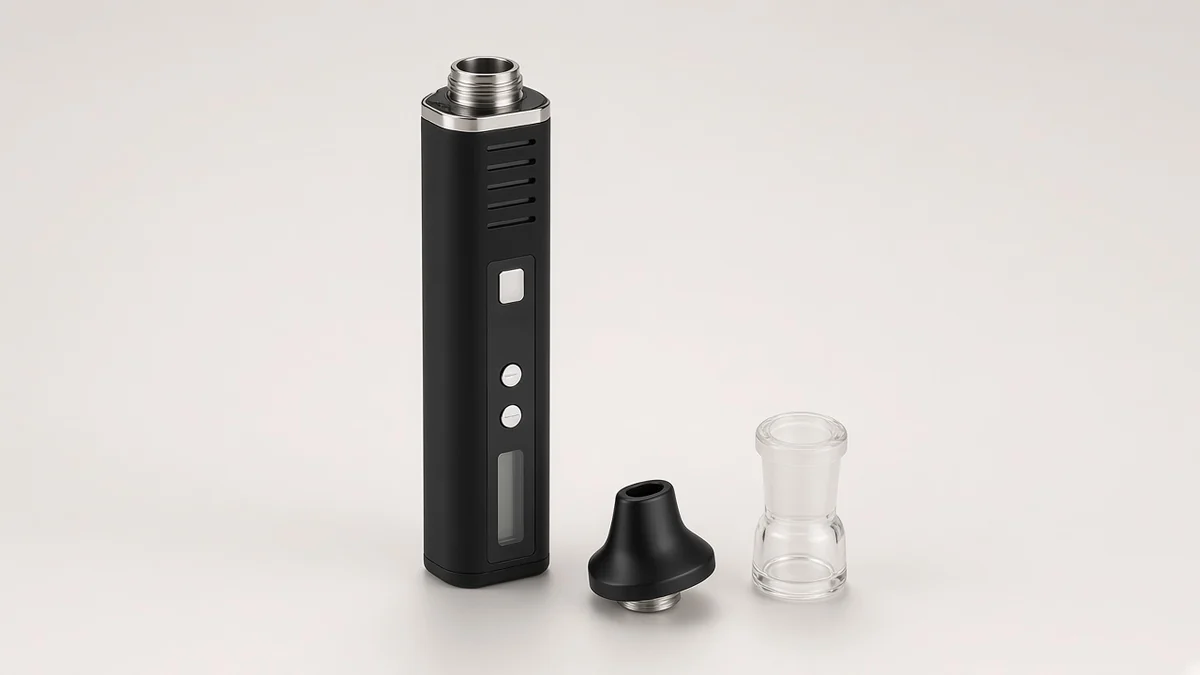
“Water pipe compatible,” “WPA included,” “glass stem,” and “bong ready” are starting labels, not finished draw-interface specifications. Compatibility tells you that someone is claiming a connection is possible. It does not tell you whether an adapter is included, whether it is a separate accessory, what joint it is designed to meet, or whether the native mouthpiece remains the intended standalone interface. Two vaporizers can share a “works with a water pipe” line and still differ on the adapter, the joint, and the mouthpiece that ships on the device.
A glass-stem claim is also incomplete on its own as an adapter identification. Cooling Unit or a Glass Stem: What Comes Off the Top of a Dry Herb Vaporizer already treats a stem as a top-path part. That stem may be the native mouthpiece. It may also be removed so an adapter can seat in the same opening, or a different opening. Those are separate facts. Flame Heat or a Battery Heater: How a Dry Herb Vaporizer Is Powered already treats the power path. A removable cap on a flame-heated device is not, by itself, a water-pipe adapter. Session Timer or a Temperature Hold: How Long a Dry Herb Vape Stays at Heat already treats heat duration. Duration is not a draw interface.
If the listing says only “water pipe compatible” or only “glass mouthpiece,” write that wording down and ask which interface is specified, whether an adapter is included, and which revision the drawing or accessory list actually names. Do not treat a group photograph as proof of an adapter, and do not treat a stem as an adapter until the documentation says it is one.
🧩 3. Identifying the Native Mouthpiece on a Sample and a Drawing
A sample in the hand is the right place to look for the native mouthpiece. Identify the part the version treats as the standalone draw interface: the mouthpiece, stem, or top cap you draw through when no water pipe is attached. Record whether it is removable, whether it is part of a cooling-unit stack, and how it is supposed to seat. Cooling Unit or a Glass Stem: What Comes Off the Top of a Dry Herb Vaporizer already treats the parts in that stack. This guide does not retell their names. It only asks the buyer not to skip the native interface just because an adapter is also mentioned.
The native mouthpiece is also the part a user will look for when the device is used without a water pipe. If the version can be drawn only through an adapter, or only through the native mouthpiece, write that limit down. Do not assume that every removable top is interchangeable with an adapter, and do not assume that removing the mouthpiece automatically creates a water-pipe interface.
If you only have a listing photograph of an assembled device, you may see a mouthpiece and still not know whether it is removable, whether an adapter uses the same opening, or whether a second interface exists. Record that limit. Ask for a sample, the accessory list, and the named draw interfaces before a native mouthpiece is written into a brief as the only path, or as a path that can be replaced by an adapter.
📐 4. The Water-Pipe Adapter Still Has to Be Named as Its Own Interface
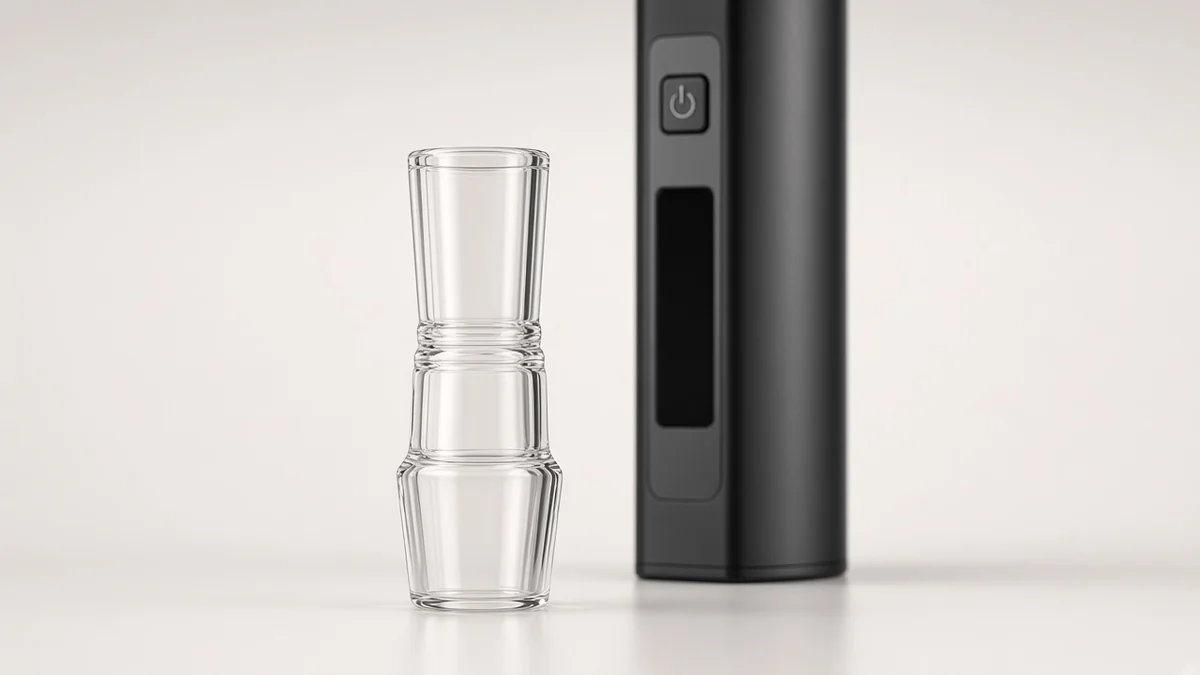
Once the native mouthpiece is recorded, the water-pipe adapter still has to be named if the version includes one, or recorded as not specified. A water-pipe adapter is a part designed to connect the vaporizer to a water-pipe joint. The drawing, the accessory list, or the manual should say whether that adapter is included, sold separately, or not offered, and how it is supposed to seat on the device. A “compatible” line leaves those facts out.
The joint the adapter is designed to meet is part of this identification, and it has to come from the version documentation. Do not assign a joint size from another device, from a common glass standard, or from a photograph of a pipe standing beside the vaporizer. If the documentation names a joint, write that wording and the revision down. If it does not, record that the joint is not specified, and ask for it before the adapter is treated as a finished interface.
Top-Load Oven or a Side-Load Door: How a Dry Herb Vaporizer Is Filled already treats how the oven is loaded. Loading path is not the draw interface. If the sample and the accessory list disagree—if a listing says “WPA included” and the packed sample has no adapter, or if the adapter does not seat as the drawing shows—stop and confirm the revision and the packing list before the interface is treated as approved. The cooling-unit stack remains a different identification and is not settled by the adapter alone.
📷 5. What a Listing Photograph Can Hide
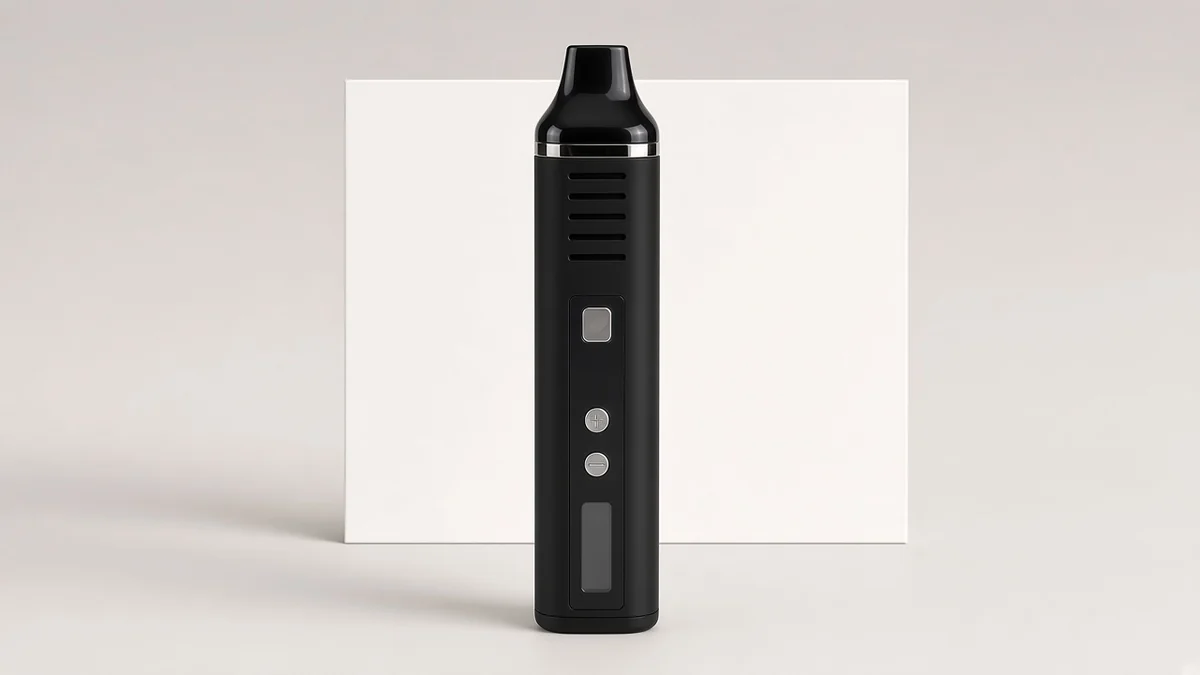
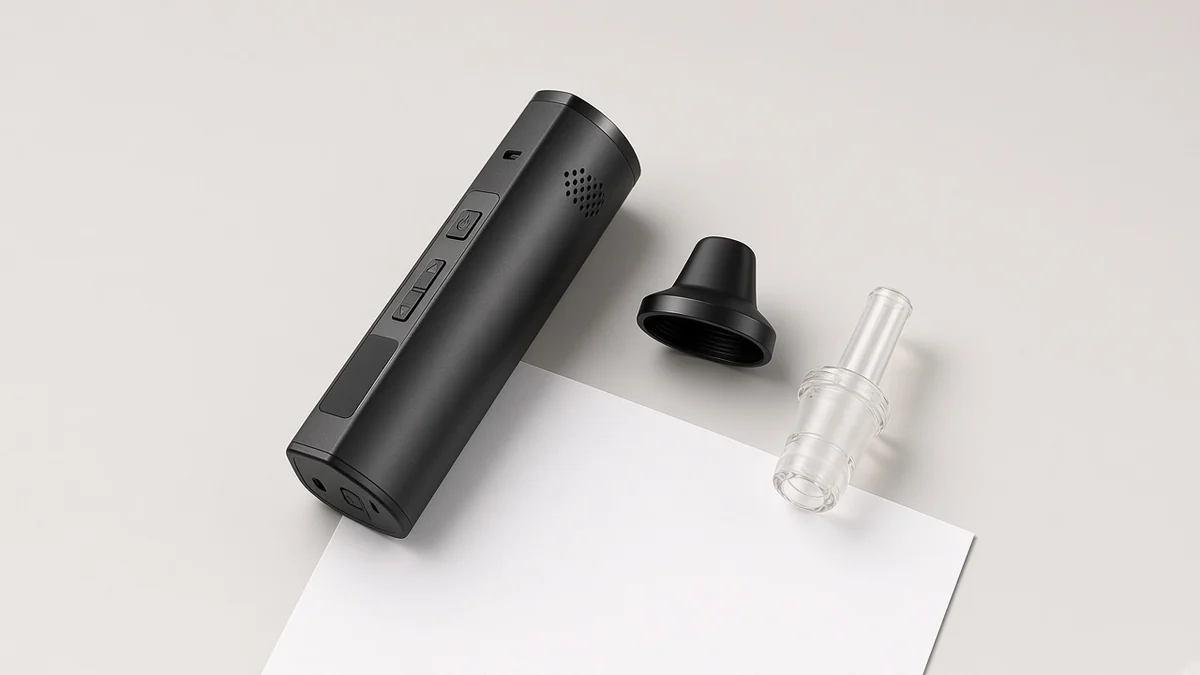
A listing photograph is a poor place to finish a draw-interface specification. A beauty shot of the assembled vaporizer can show the native mouthpiece and hide the fact that no adapter is in the box. A group photograph with a water pipe can imply compatibility without showing the adapter, the joint, or how the two parts meet. A cropped stem can look like an adapter, or an adapter can look like an ordinary mouthpiece, when the connection end is out of frame.
The photograph is also the wrong place to borrow a joint or a packing claim. A marketing image that says “water pipe compatible” or “WPA included” does not identify both interfaces, and it does not identify the joint. Those assignments come from the accessory list, the manual, and a sample of the exact version. If the listing says “works with a water pipe” and shows only the assembled device, write both interfaces down and request the documented adapter, whether it is included, how it seats, and the native mouthpiece that remains on the device.
✅ 6. What to Check on a Sample, a Manual, and a Brief
A one-line description a team can reuse should name both interfaces and should keep them apart from the cooling-unit or glass-stem part stack. Example: “Dry herb vaporizer; native mouthpiece and water-pipe adapter as named on the version accessory list or manual, including whether the adapter is included and how it seats; cooling-path parts and oven loading are documented separately.”
On the sample:
- Identify the native mouthpiece or stem used when the device is drawn on its own, and record whether it is removable.
- Look in the box and on the accessory list for a water-pipe adapter, and record whether it is present, absent, or packed as a separate accessory.
- Do not treat a glass stem, a cooling-unit cap, or a group photograph with a water pipe as the adapter until the documentation names that part.
- If an adapter is present, record how it is supposed to seat, and do not assign a joint size unless the version documentation names it.
On the drawing, manual, and current brief for that exact version:
- Record the native draw interface, the adapter interface if one is specified, whether the adapter is included, and the revision.
- Keep cooling-unit or glass-stem parts, oven loading, and heat-duration behavior in separate lines.
- If the packing list and the sample disagree, stop and confirm the revision before writing a draw-interface specification.
On the listing:
- Treat “water pipe compatible,” “WPA included,” “glass stem,” and “bong ready” as labels to reconcile with the two interfaces.
- An adapter shown for a named catalog example is that page’s documentation, not a default for the next vaporizer in the same photograph style.
Questions worth sending with a sample request:
- What is the native mouthpiece or stem on this exact version, and is it removable?
- Does this version include a water-pipe adapter, is the adapter sold separately, or is no adapter specified?
- If an adapter is specified, how does it seat on the device, and what joint does the documentation name?
- Can the device still be drawn through the native mouthpiece when the adapter is not used?
- Which revision do the quotation, the accessory list, and the sample cover, and do both interfaces match that revision?
❓ 7. Short Answers a Brief Can Reuse
❓ 7.1 Identification Questions
What is a native mouthpiece on a dry herb vaporizer?
It is the draw interface the version treats as the part you draw through when the device is used on its own. It may be a removable mouthpiece, a stem, or another documented top part, and it may also belong to a cooling-unit stack.
Is a water-pipe adapter the same part as the native mouthpiece?
No. A water-pipe adapter is a part or interface designed to connect the vaporizer to a water-pipe joint. The two interfaces have to be identified separately, including whether both are present and how the adapter seats.
Does a “glass stem” or “water pipe compatible” label complete the draw-interface specification?
No. Those phrases are starting labels. They do not, by themselves, say whether an adapter is included, how it connects, or whether the native mouthpiece remains the standalone interface.
Is a glass stem automatically a water-pipe adapter?
No. A glass stem may be the native mouthpiece or a cooling-path part. It is a water-pipe adapter only when the version documentation treats it as the part that connects to a water-pipe joint.
Should a joint size be taken from another device or from a photograph?
No. If a joint is part of the specification, it has to be named in the version documentation. Do not assign a joint size from another vaporizer, from a common glass standard, or from a group photograph.
Can a listing photograph settle both interfaces?
It can support an identification if the native mouthpiece is clear, the adapter is shown as a separate part, the packing claim matches the sample, and the documentation names how the adapter seats. It often shows only the assembled device, or a water pipe beside it, without the adapter. Confirm both interfaces on a sample and in the version documentation.