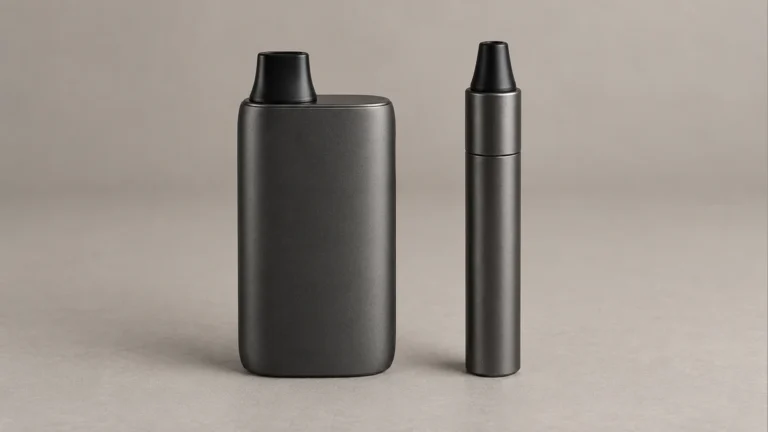
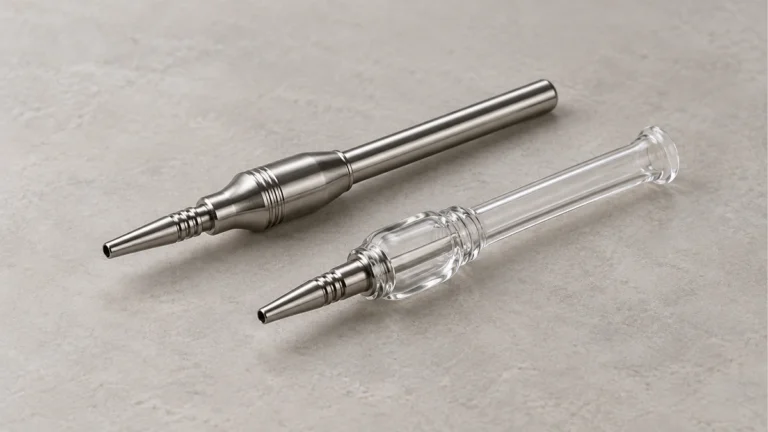
🔌 1. The Air Path Before Water Enters the Picture
A standard 510 cartridge is a closed, short system. Vapor forms at the wick, travels a few centimeters through a narrow airflow channel, and exits through the mouthpiece. The intake hole size, the wick’s saturation, and the coil’s proximity to that airflow channel are all calibrated by the cartridge manufacturer to produce a specific draw resistance. Nothing about that calibration accounts for a water chamber, because the cartridge was never engineered to be a bong attachment. It was engineered to be pulled on directly, mouthpiece to lips.
🔌 1.1. What a Standard Draw Feels Like
Most 510 cartridges are tuned for a moderately restrictive draw — enough resistance to slow airflow across the wick so the coil has time to vaporize the oil, but not so much that the pull feels labored. That resistance is a fixed variable set at the factory. It doesn’t change based on what happens after the vapor leaves the cartridge.
🔌 1.2. Where an Adapter Interrupts That Path
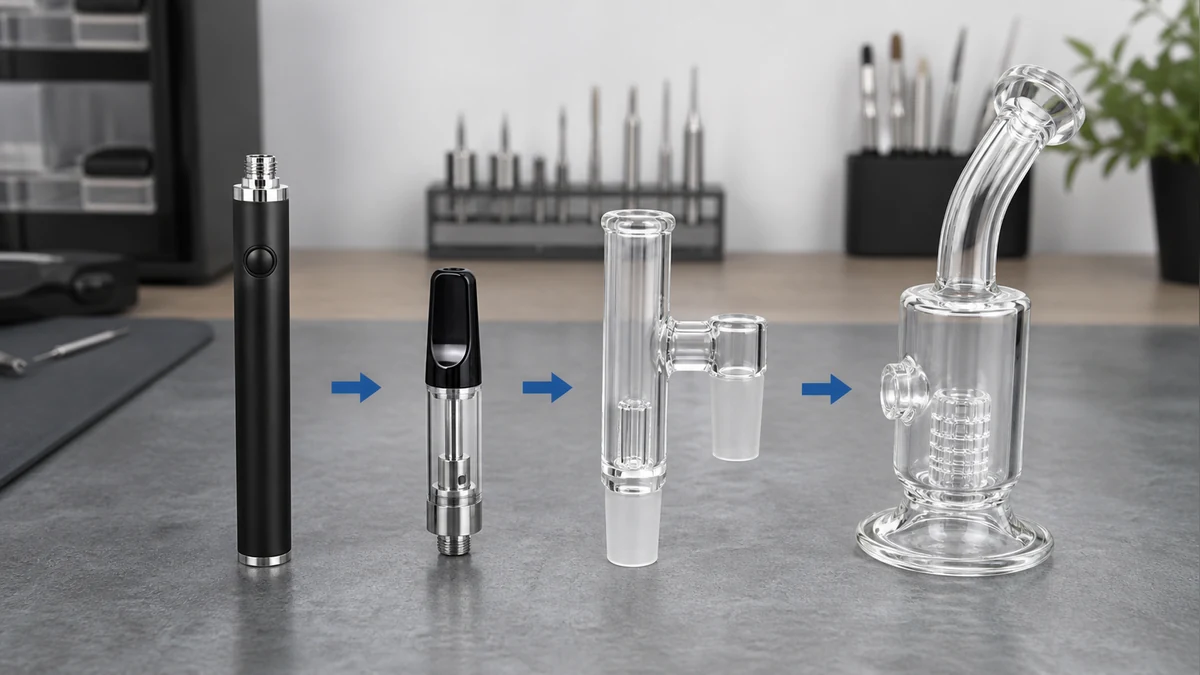
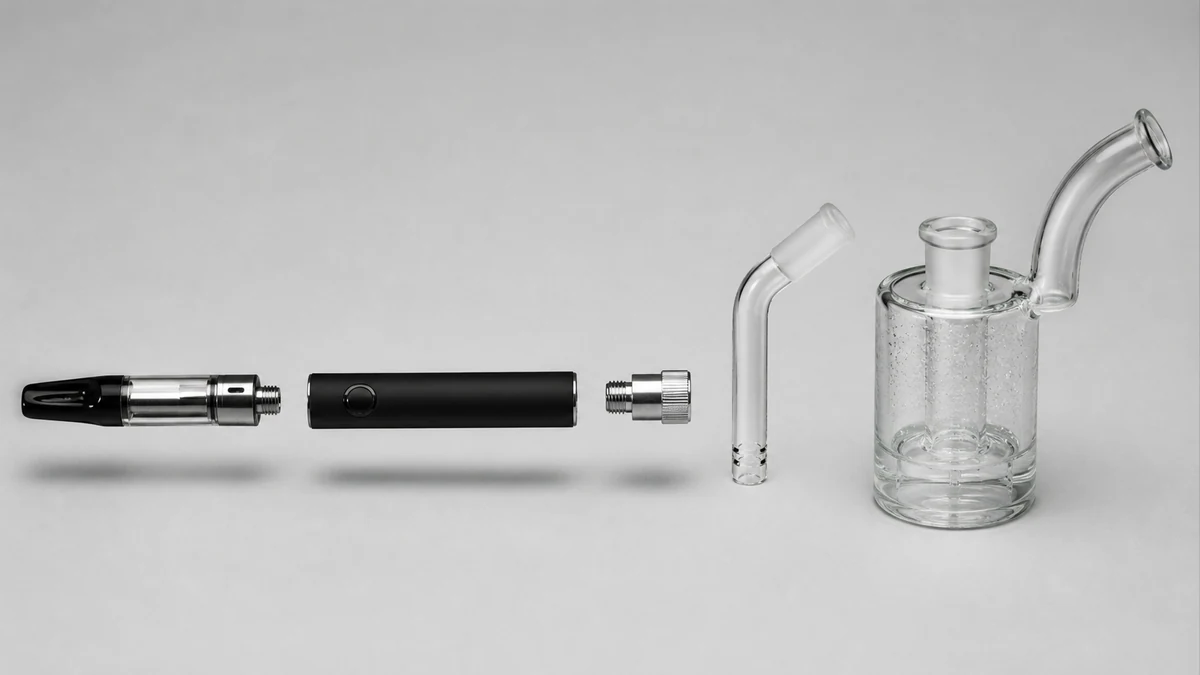
A water bong adapter sits between the cartridge and a glass joint, converting the male or female 510 output into whatever joint size the glass piece uses. That conversion adds a second air chamber before the vapor ever reaches water. In effect, the adapter turns a one-stage air path into a multi-stage one: cartridge, adapter chamber, glass joint, water column, then the mouthpiece. Each added stage is a place where resistance, temperature, and moisture can behave differently than they do in a direct pull. Anyone comparing 510 hardware generally, including how these threaded connections are built, can review AOVAPE’s 510 cartridge guide for the baseline mechanics before adding an adapter into the mix.
💧 2. What the Water Chamber Actually Changes
Water doesn’t just sit passively in the chamber. Vapor has to displace it, usually by bubbling up through a downstem or diffuser, before it can travel to the mouthpiece. That displacement is where a water adapter setup starts to feel physically different from a direct cartridge pull.
💧 2.1. Draw Resistance Goes Up
Pulling vapor through standing water requires more negative pressure than pulling it through open air. How much more depends on water level, chamber diameter, and whether the downstem is a simple open tube or a slitted diffuser designed to break vapor into smaller bubbles. Finer diffusion generally increases resistance further, because the vapor has more total water surface to pass through. None of this is adjustable from the cartridge side — it’s entirely a function of the adapter and glass piece. Readers unfamiliar with how airflow and resistance interact inside vapor hardware generally can cross-reference AOVAPE’s atomizer explainer, which covers the coil-and-airflow relationship that a water chamber is added on top of.
💧 2.2. Condensation and Moisture Return
Because water cools the surrounding air, vapor condenses faster once it enters a water chamber than it would in an open cartridge pull. That condensation collects as fine droplets on the interior glass and, depending on drag technique and adapter angle, can travel backward toward the joint and adapter rather than staying contained in the chamber. This matters specifically because the adapter’s threaded connector sits close to that moisture path, and a 510 connector was never designed to be near standing liquid or condensation runoff.
| Factor | Effect on resistance |
|---|---|
| Water level in the chamber | Higher level generally increases resistance |
| Downstem or diffuser design | Finer diffusion increases resistance further |
| Adapter chamber volume | Larger internal volume can soften the pull but slows vapor delivery |
| Joint fit and seal | A loose fit pulls in outside air and reduces effective draw |
⚖️ 3. Weight and Fit at the 510 Connection
A 510 thread is a small connector built to support the weight of a cartridge, not a glass adapter and a partially filled water chamber hanging off the same thread.
⚖️ 3.1. Cantilever Load on a Small Thread
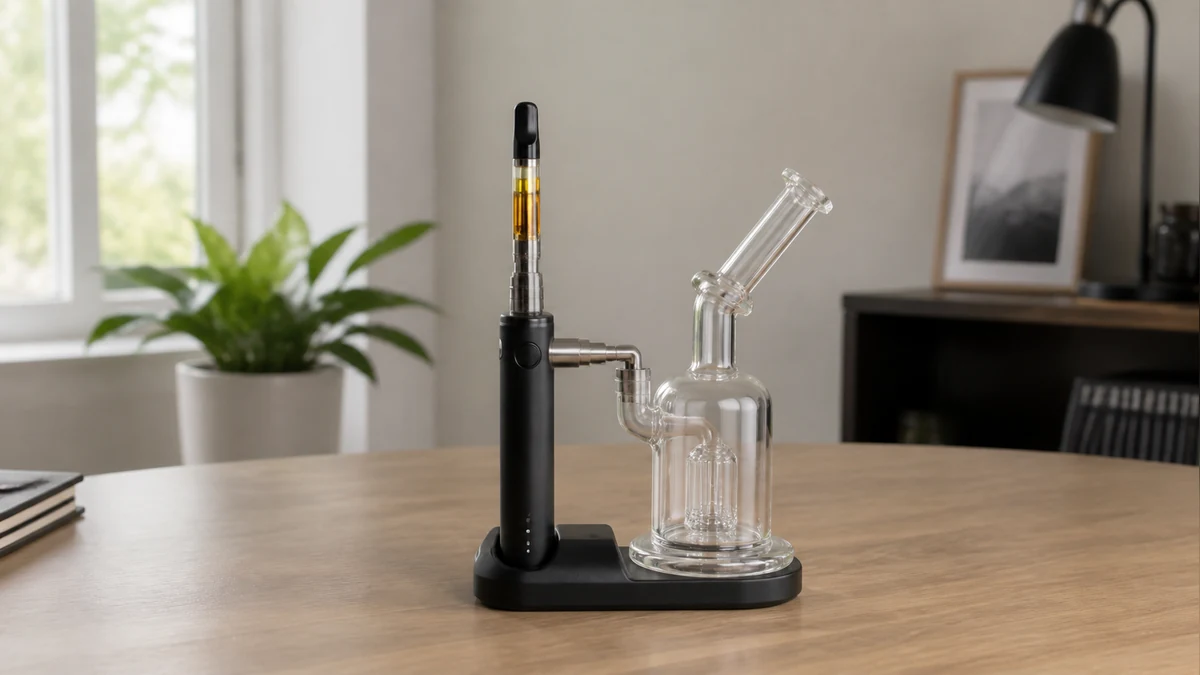
When a glass adapter, its water, and its downstem are all suspended from the 510 connection, the setup creates a lateral load — a cantilever — that the threading has to resist every time the piece is lifted, angled, or set down. Repeated cantilever stress on a small metal thread is a mechanical wear pattern, not a one-time risk, and it’s worth understanding before assuming any cartridge can carry that load indefinitely. The 510 cartridge guide covers how that connector is built, which is useful context for judging how much sustained sideways load is reasonable to expect from it.
⚖️ 3.2. Fit Tolerances Between Adapter and Joint
Glass joints come in a handful of standard sizes, and an adapter has to match the specific joint size of the glass piece it’s paired with, not just the 510 thread on the cartridge side. A fit that’s slightly too loose won’t seal properly, which pulls in outside air around the joint and reduces how much vapor actually reaches the water chamber versus how much simply escapes at the connection. A fit that’s too tight can put additional stress back onto the same 510 threading described above. Matching adapter to joint size is a spec-driven decision, not something to eyeball.
🧽 4. Cleaning Boundaries Between Adapter and Cartridge
Water tools and cartridges have almost opposite cleaning requirements, and treating them as one combined piece of hardware is where most maintenance mistakes start.
🧽 4.1. What Water Touches vs What It Shouldn’t
The glass chamber and downstem are meant to be rinsed and, on a normal cadence, cleaned with the same isopropyl-and-rinse approach used for any water pipe. The 510 threading and the cartridge itself are not part of that washable surface. The connector has exposed metal contacts, and any moisture that reaches those contacts risks corrosion or a poor electrical connection over time. That’s a materially different maintenance category than the glass it’s attached to.
🧽 4.2. A Practical Cleaning Boundary
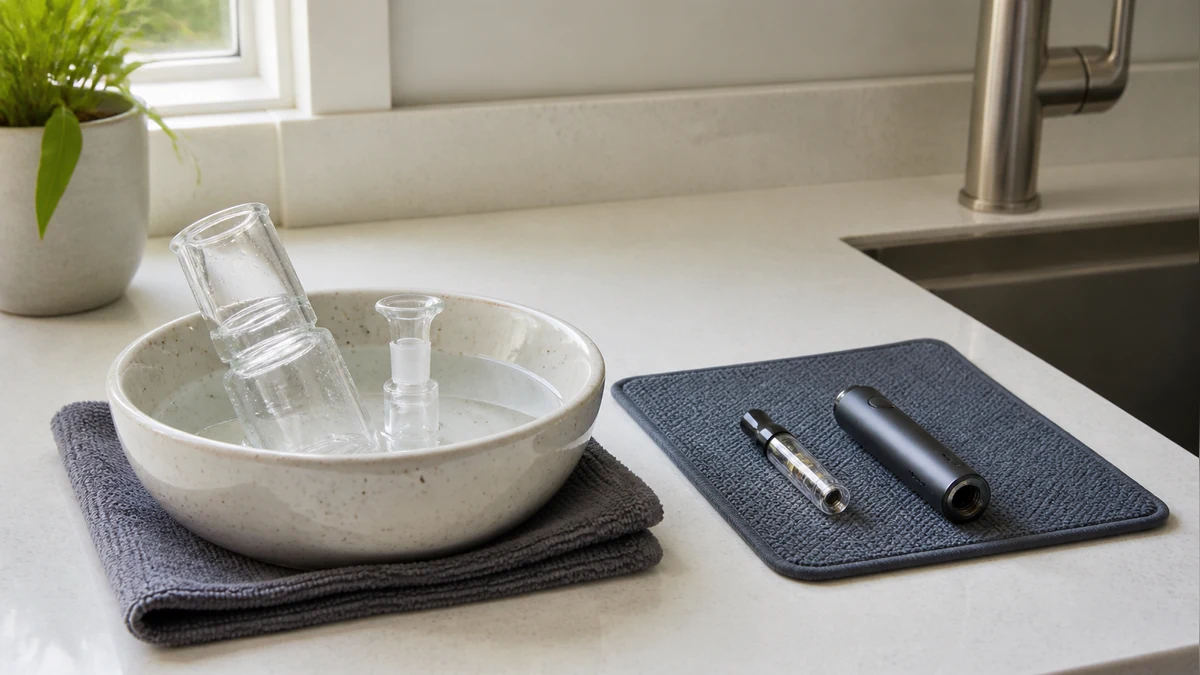
The straightforward approach is to separate the cartridge from the adapter before any rinsing or soaking happens, clean the glass and downstem on their own, and let the adapter’s threaded end dry completely before reattaching a cartridge to it. AOVAPE’s dab rig cleaning guide covers the general glass-cleaning cadence that applies to the water-chamber side of this setup, while the connector side simply needs to stay dry, not cleaned with liquid at all.
🌡️ 5. Why Cooler Vapor Isn’t the Same as Lower Risk
Cooler vapor feels different on the throat, and that sensation is easy to interpret as evidence that something meaningful has changed about what’s being inhaled. That interpretation doesn’t hold up on its own.
🌡️ 5.1. What Water Filtration Can and Cannot Do
Water contact does cool vapor and can trap some water-soluble particulate as it passes through. What it does not do is remove or alter the underlying compounds being vaporized from the cartridge’s oil. There’s no manufacturer certification or independent test data referenced here that shows a water adapter changes cannabinoid content, additive content, or any other chemical property of the vapor — it changes temperature and physical resistance, and that’s the limit of what can be said about it without specific supporting data.
🌡️ 5.2. Reading the Difference Correctly
A smoother-feeling draw is a real, subjective response to lower temperature and often a slower, more deliberate pull technique that water resistance tends to encourage. That’s a comfort difference, not a safety outcome, and the two shouldn’t be conflated when deciding whether a water adapter is the right accessory for a given cartridge setup.
🛒 6. Choosing a Water Adapter Without Guessing
Once the mechanical tradeoffs are clear, the decision comes down to matching hardware correctly and being honest about how the setup will actually get used.
🛒 6.1. Match the Adapter to the Cartridge, Not the Other Way Around
Thread type, connector orientation, and load tolerance should be checked against the cartridge and battery documentation first, since those specifications vary by manufacturer and aren’t universal across every 510 product. AOVAPE’s vape parts overview is a useful starting point for understanding how 510 hardware components are generally specified before adding a third-party adapter into the chain.
🛒 6.2. Decide Based on Use Pattern
A cartridge-and-adapter-and-glass setup is a stationary, seated-use configuration by nature — it adds bulk, fragility, and cleaning steps that a standalone pen doesn’t have. Buyers who want the discretion and portability of a pen should weigh whether a water adapter actually fits that goal, or whether it’s solving a different problem than the one they started with. For readers comparing this against other water-tool categories entirely, AOVAPE’s overview of types of dab rigs provides parallel context on how glass-and-water setups are typically evaluated.
🪑 7. A Bench Test Before You Commit to the Setup
Before treating an adapter as part of the daily kit, assemble it on a clear, level table with an empty water piece and the battery powered off. The useful question is not merely whether the threads engage. Look at where the combined weight lands, whether the cartridge sits upright, and whether touching the mouthpiece makes the battery or adapter rock. A connection that technically fits but leaves the battery hanging sideways is asking a small threaded joint to act like a structural bracket.
Then add only enough water for the chamber to function and take an unpowered draw. This separates airflow resistance from heating behavior. If the draw already feels unusually restricted, more power is not the answer; the adapter bore, water level, or joint geometry needs attention. After the dry check, disassemble the stack and confirm that the center contact and threads remain dry. Water seen near the electrical connection is a stop signal, not a prompt to keep experimenting.
🧱 7.1. Keep the Assembly Supported
A compact, table-supported arrangement is easier to inspect and less likely to lever against the cartridge than a tall improvised tower. The best adapter is therefore not automatically the longest or most universal-looking one. It is the one that mates cleanly, keeps the cartridge accessible, and lets every wet component be removed without twisting the battery or carrying water over the electronics.
Repeat the unpowered draw after reassembly and listen for a new whistle or leak. A changed sound often points to a seal or alignment problem before it becomes a frustrating session problem. If the setup only works when a joint is held at an angle, it is not a stable match. Stop and correct the fit rather than tightening harder, adding tape, or using the cartridge threads to pull mismatched parts together.
✅ 8. Decision Summary
A water bong adapter changes three things about a cartridge that are worth deciding on deliberately: it increases draw resistance in proportion to water level and diffuser design, it introduces condensation and moisture near a 510 connector that was never built to handle liquid, and it adds cantilever load and a separate cleaning discipline that a standalone cartridge never required. None of that amounts to a safety improvement — cooler, smoother-feeling vapor is a comfort change, not a reduction in what’s being inhaled. The right call depends on setting: a seated, at-home setup can absorb the added bulk and maintenance, while a buyer prioritizing portability and simplicity is likely better served by a direct cartridge pull. Either way, matching adapter specs to the exact cartridge and battery documentation, and keeping water away from the threaded connector, are the two non-negotiable steps before using one.
📚 9. Sources
- CCELL Cartridge — ccell.com/cartridge
- CCELL M3B Plus Battery — ccell.com/battery/m3b-plus