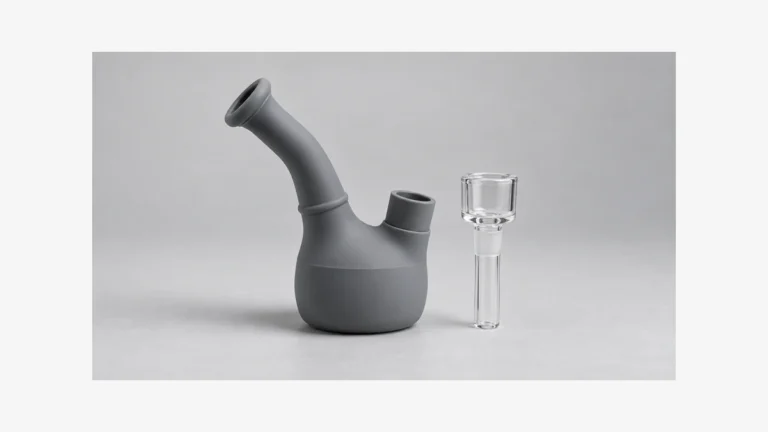
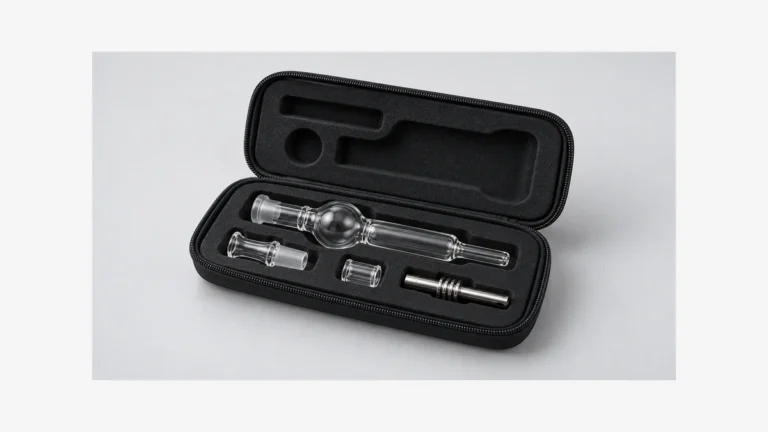
The outside has been rinsed, but the smell is still there. With a silicone bubbler, a clean-looking exterior does not show what is happening at an internal seam or beneath a documented removable component. Before repeating a household cleaning suggestion, identify the model, the materials in the assembly and the parts its instructions actually allow you to separate.
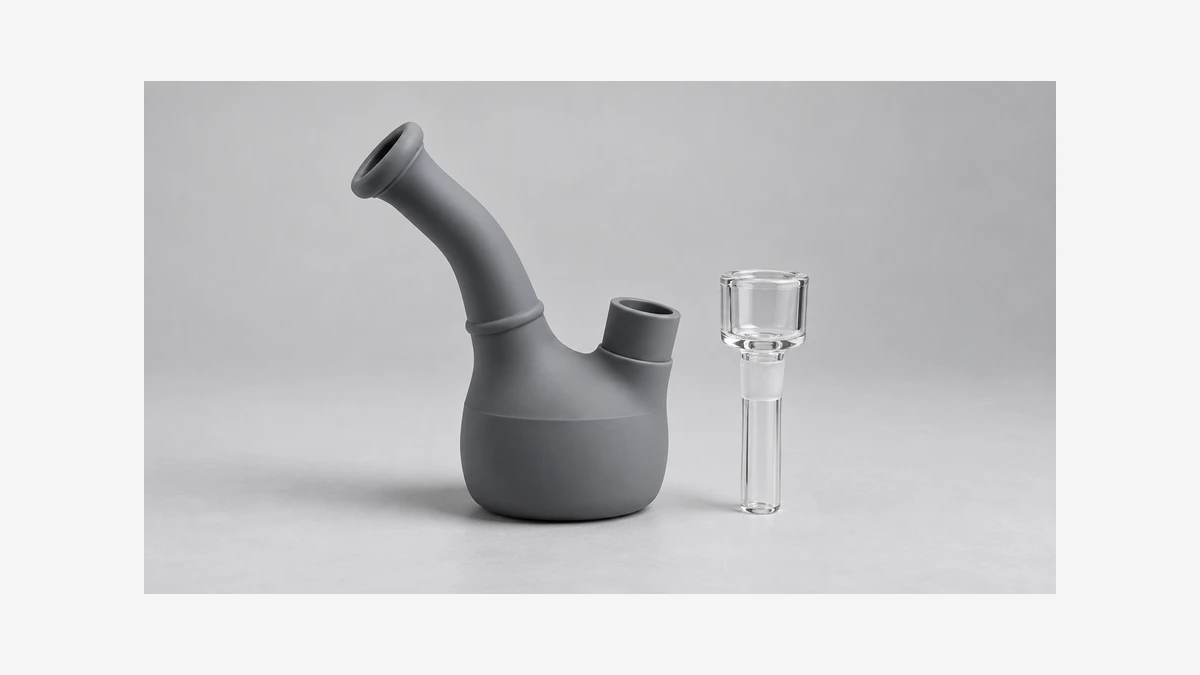
A persistent odor is a real observation. It does not identify a chemical, establish a health risk or prove that the body has degraded. The useful next question is narrower: what was cleaned, what remained assembled, and what changed? Those details make a care problem easier to describe without pretending that smell alone is a material test.
🧩 1. Start with the particular silicone bubbler
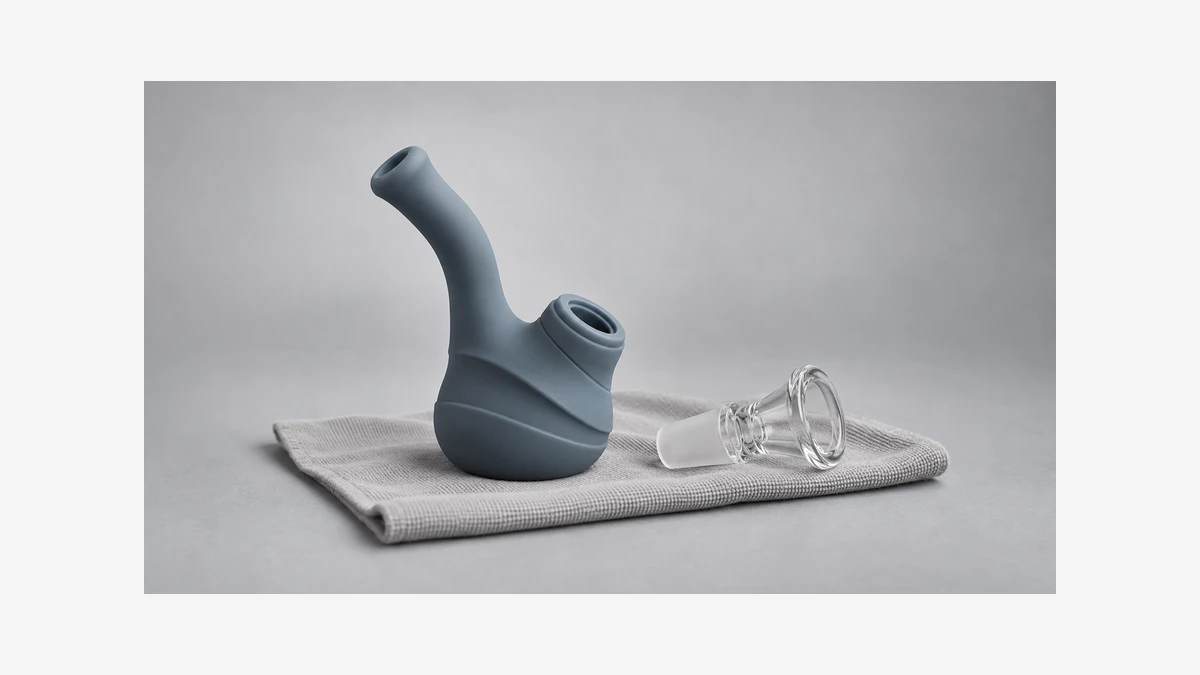
A soft exterior can surround several different arrangements. There may be a separate rigid fitting, a removable base or no owner-removable base at all. Do not infer the parts count from the material name. Two objects with similar colors or silhouettes can have different opening and care instructions.
Find the item name on the original packaging, receipt or maker’s page. Compare the actual body shape and visible fittings with the identified version, including the base and any cap. A photograph from the front may conceal the feature that distinguishes one revision from another.
In a pack-away silicone-body discussion, the owner described choosing the item after breaking glass. Comments praised convenience, but that preference is not a verified drop rating. It also does not establish that every rigid fitting or removable section is protected by the soft body.
The silicone-and-glass construction guide covers broader material roles. Here the problem is the individual assembly after care: what can be accessed, what stays together and which surface an observation actually concerns. A general material comparison cannot replace that parts map.
🔍 2. Identify the insert without testing it by force
A rigid-looking insert should be identified from the parts information, not by tapping it, bending its surround or comparing how cold it feels. Those improvised tests do not establish composition. If the material is not documented, describe it as an unidentified fitting rather than confidently calling it glass, ceramic or metal.
Keep the body and fitting names separate. The description silicone bubbler may refer to the outer body without describing every component. A care instruction aimed at that body does not automatically cover a rigid insert, seal, decorative finish or separate cap.
🧭 2.1 An unfamiliar angle is not proof of a missing part
In a discussion about an angled opening, the owner thought a stem might be missing. Replies identified a different intended configuration. The useful point is identification, not directions for that configuration: comparing the opening with the exact model matters before calling the assembly incomplete.
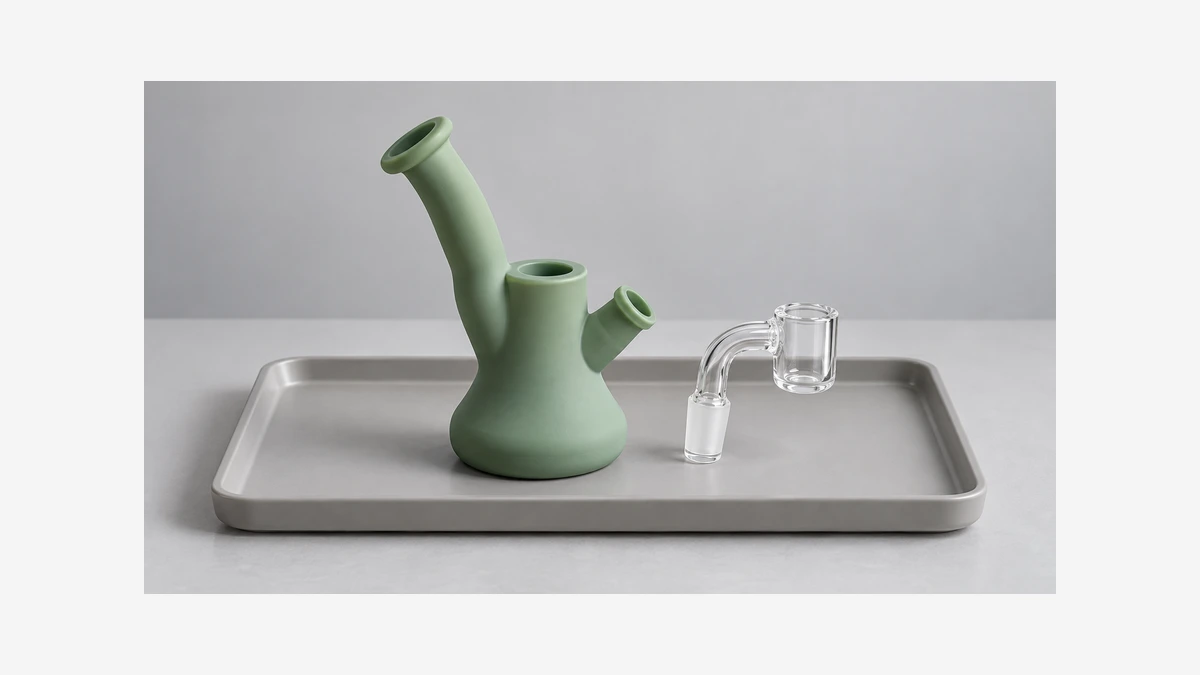
An extra opening, an offset fitting or an angled socket can all invite the wrong comparison with another piece. Record what is visible and ask which original component belongs there. Do not add an adapter or substitute part simply to make the outline resemble a familiar design.
The mouthpiece explanation distinguishes a cover from a component that belongs to the body. That distinction is useful when locating an odor or visible mark. An observation on a separate cap should not be reported as though it were necessarily inside the main chamber.
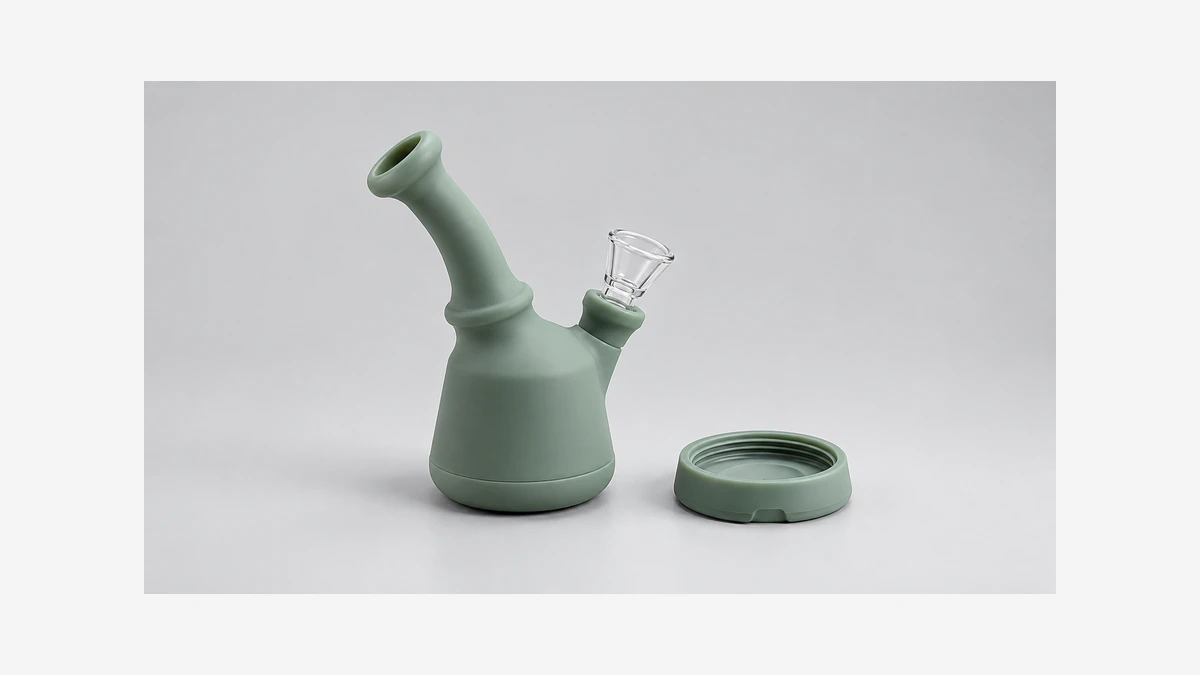
🔗 3. A line in the surface is not automatically an opening
A molded line, a decorative rib and a joint between separate parts can look similar. The reliable distinction comes from the model’s diagram and care instructions. Do not pull on a line just to find out which category it belongs to.
If the documentation identifies a removable base, follow its removal directions for the empty, cool assembly. If it does not, leave the base question unresolved. Another owner’s piece opening at that location does not establish that yours was designed to do the same.
Where the intended opening cannot be found, a clear photograph of the underside and the complete side profile is useful. Include the item identity rather than only a close crop of the line. The maker needs to know which assembly is being discussed before interpreting that detail.
A small chamber’s layout can differ from a larger one, but size alone does not determine removability. There is no general rule that compact bodies have removable bases, or that a line near the bottom is necessarily a service opening.
A simple parts record can name the body, cap and separate rigid fitting without assigning materials that are not documented. Mark which item the odor seems associated with and which item was not examined separately because the instructions do not allow removal. That is an honest account of access, rather than a claim that every hidden surface was inspected.
Keep original condition photographs if they exist. A line present in the original picture may help identify a molded detail, while a new photograph can show a changed edge. Neither picture alone establishes why the change happened. The comparison is useful because it asks a precise question about one location instead of treating every surface line as a tear.
👃 4. Keep the odor description separate from a diagnosis
The owner of a silicone bubbler with persistent smell received several household-method suggestions. The visible replies do not establish a controlled result or a method validated for every model. They are a useful record of the confusion, not a universal care protocol.
Describe where the odor was noticed: near the body, a separate cap, the storage pouch or the whole assembled item. If the instructions permit components to be separated, note which ones were apart at the time. Keep this observational; it does not establish which material is responsible.
Record whether the concern appeared before cleaning, after cleaning or after storage. A sequence is useful, but it is not proof of cause. A newly noticed smell after opening a pouch could prompt a question about both the pouch and the equipment rather than a conclusion about the silicone.
Likewise, the absence of smell would not establish that a component is undamaged or that every internal surface has been cleaned. Odor, visible condition and completion of the care instructions are three different observations. None should be used as a shortcut for the others.
🧼 5. Gentle care is specific to the assembly
PieceMaker’s own care page warns that abrasion and forced component removal can tear silicone. That narrow handling warning is relevant to the care question. It does not make the page a universal procedure for another maker’s combination of body, insert and finish.
A list of household methods in a forum can contain different temperatures, chemicals and mechanical actions. Do not combine them into a new routine. A method described for one identified product has not thereby been established for an unidentified soft body with several different components.
Use the directions for the exact assembly, including any exclusions for its separate parts. This article does not prescribe a solvent, concentration, soak duration, boiling, freezer treatment or dishwasher cycle. A broad material name cannot resolve the missing information about the complete object.
If a previous method is relevant to the concern, tell the maker exactly what was used and on which component. Do not replace the actual product name with a guess about its ingredients. A label photograph can be more useful than a vague description such as strong cleaner.
A ribbed exterior can look different after a rinse because visible material remains between raised details. Record that as an exterior observation. Do not let a change on the outside become an assumed explanation for an odor noticed near an internal fitting. Both details may be relevant, but they describe different locations and should be reported separately.
If instructions contain separate directions for a body and an insert, keep that separation in the care record. An entry saying the piece was washed leaves out which parts were treated and which were excluded. A short factual note about the documented steps is more useful than a general claim that everything was cleaned thoroughly.
💧 6. Separate drying from closed storage
Follow the documented drying instructions for each removable component. A part can look dry on its outside while its documented recess or hollow section remains out of view. Do not assume the entire assembly has completed its care process simply because the exposed surface no longer has visible droplets.
Do not open an undocumented seam to accelerate drying. If the directions leave an internal area inaccessible or unclear, that is a question for the maker. It is not permission to pry the body apart or force a fitting out of a soft socket.
A cover or pouch has its own purpose. Unless its instructions identify it as part of the drying arrangement, do not treat closed storage as an equivalent step. Follow the equipment’s directions before returning it to the documented storage configuration.
Keep the pouch’s care instructions separate too. A persistent smell around the stored kit may involve more than one item, but smell alone cannot identify which one. A note about the case and the equipment as separate objects is more useful than treating the whole kit as one material.
⚠️ 7. A tear or changed fit is a different problem
A visible tear, an edge no longer seated in its original position or a fitting that has become loose is more specific than an odor complaint. Record that change separately. It should not disappear into a general request for a stronger cleaning method.
Take a visibly damaged or uncertain assembly out of service and ask about the particular part. Do not improvise a reseal with glue, tape or another fitting. A concealed gap does not establish that the assembly has returned to its intended condition.
A component looking displaced after care does not by itself prove the cleaner caused it. Include the sequence and the visible change without inventing a mechanism. The maker may need photographs of the body, the fitting and the original item identification to interpret the concern.
If no reliable model information is available, keep that limitation explicit. A response for a similar-looking piece cannot establish the materials or fit of yours. Do not turn a guessed identification into permission to use a repair or care method.
When a care page changes or the item has several versions, save the exact model reference with the instructions being followed. A procedure for a current removable-base model may not describe an older one-piece body. The model name and diagram should agree with the object before the directions are treated as applicable.
Uncertainty about a removable component is itself useful information. A support request can say that the diagram is missing or that the pictured opening does not match the object. There is no need to force a positive identification first. The answer should begin with the correct parts layout, before moving on to the unresolved odor or fit question.
📝 8. Send a parts-based description
A useful message begins with the model and a photograph of the complete empty assembly. Add the base, the relevant opening and any visible change. State which components the instructions identify as removable and which remained together during care.
Then describe the concern: where the odor is noticed, when it appeared, which care directions were followed and whether a fit or surface change is also visible. Ask about that particular combination of observations. The useful answer is the next documented step for that assembly, rather than a promise that one household remedy will remove every smell.