A smell proof bag with lock can leave its owner with two different questions: why the lock will not release, and whether the bag has actually closed. A click answers neither question completely. The latch may have engaged without capturing the intended zipper tabs, or the outer zipper may be closed while a separate inner closure remains open.
Understanding those parts is more useful than treating every problem as a broken combination lock. Start with the empty bag, its own instructions and a code you already know. An unfamiliar reset control, forgotten code or damaged zipper calls for a different response from a tab that simply has not reached its intended position.
🔍 1. Identify the closures on a smell proof bag with lock
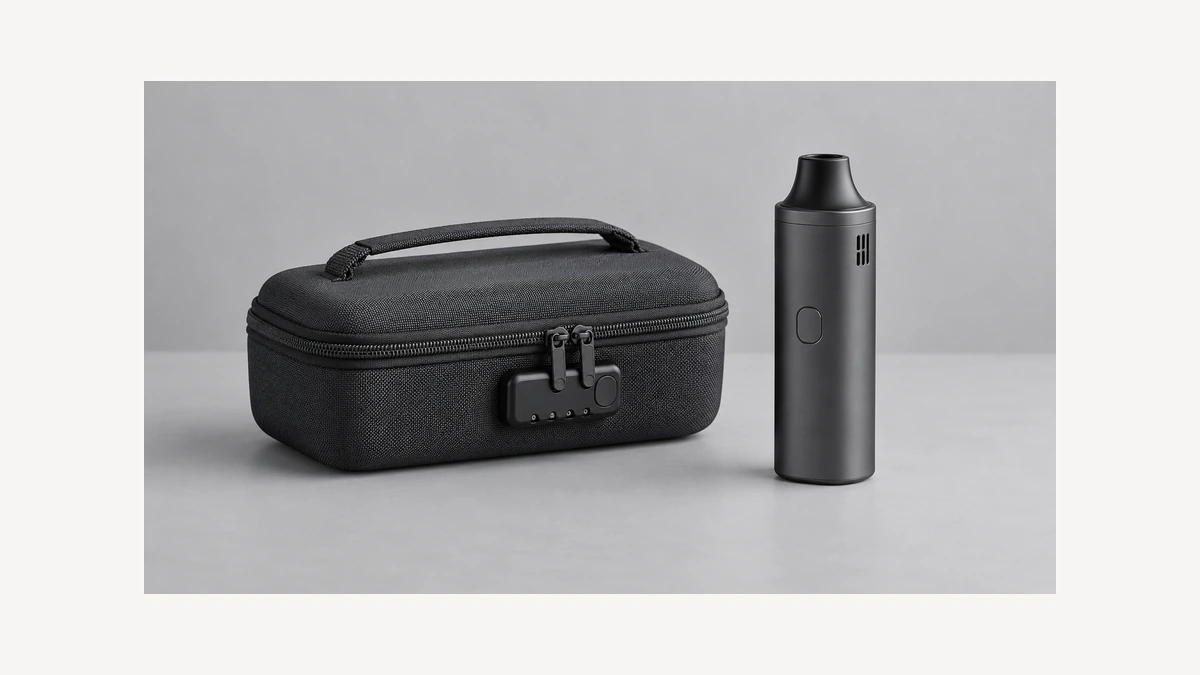
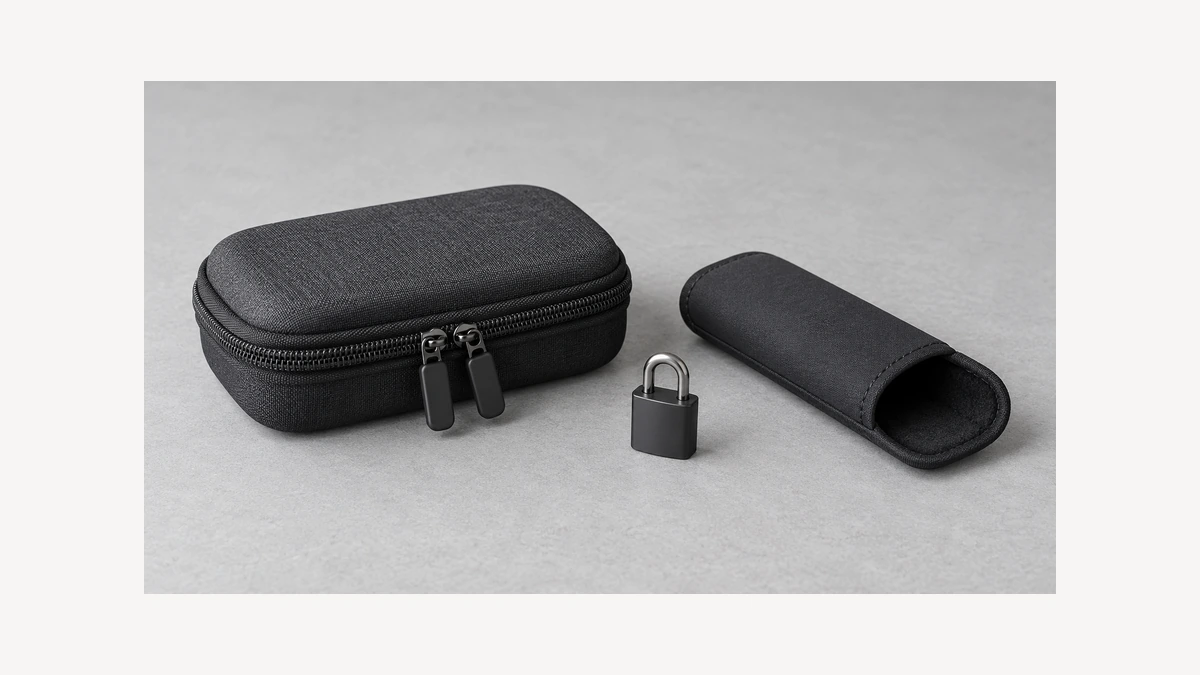
Look at the bag as an assembly rather than one sealed object. The outer shell, zipper, lining, inner pouch and lock may be separate components. A fold-over flap might cover a zipper without locking it. A removable pouch might have its own closure while sharing the outer bag’s storage space.
On a design with an integrated zipper lock, the owner’s instructions should show which tabs enter the lock and which control releases them. A separate padlock is a different arrangement: its attachment points belong to the bag, but the lock has its own mechanism and instructions. A small padlock included in the packaging does not establish that every opening on the bag is lockable.
One manufacturer example illustrates the distinction without establishing a universal design. RYOT’s Flat Pack description lists a removable inner bag, a flexible roll closure and an included separate lock on its larger sizes. The page does not justify assuming that every layer has the same closure or that every size includes identical hardware.
For an unidentified bag, keep the description equally specific: “two outer zipper tabs and a separate inner pouch” is useful. “The seal is the lock” skips the very distinction that needs checking.
🧷 2. Separate the slider from the pull tab
The slider is the small body that travels along the zipper; YKK describes its role in joining and separating the zipper elements. The pull tab is the part held to move it. They are connected, but they are not interchangeable names. If a tab bends while the slider remains on the track, the visible damage is in a different place from a slider that has come away from the zipper.
This distinction matters when describing a locking problem. On a bag designed to capture two tabs, an owner might see one tab near the lock and assume the second slider is also in position. Look at both slider bodies and the intended attachment points. Use the product’s diagram rather than guessing from the shape of a recess.
Do not assume the sliders must reach the end of the entire zipper run. Different openings use different arrangements, and two sliders can meet at a documented locking point along that run. The relevant question is whether this bag’s parts are in their specified position, not whether every zipper works like another bag.
If a tab is twisted or will not sit where the instructions show, forcing the latch does not resolve the mismatch. Photograph the position while the bag is empty and unlocked. That records what is happening without adding another uncertain fault by bending a tab or pulling against the lock.
🔐 3. A latch click is one observation, not a complete check
Suppose an integrated lock clicks, but one of the intended tabs remains outside its recess. The sound tells you something moved inside the latch. It does not establish that both tabs were captured. Whether that situation is possible on a particular lock depends on its construction; it is a scenario to compare with the instructions, not a diagnosis to apply to every bag.
The same care applies when looking at a closed zipper. Tabs being close together does not establish that the track is intact. A visible opening elsewhere along the track, separated zipper tape or an open seam is a separate observation. Closing the lock again cannot be taken as proof that those parts have repaired themselves.
These questions arose in a January 31, 2026 owner discussion. One commenter said they had never understood the lock’s purpose; others described a forgotten code or a code that had worked once. The visible comments establish that owners were confused. They do not establish a common mechanism failure, or show that anyone had specifically left a zipper tab out.
Keep that boundary when checking your own bag. Describe the part you can see and the action it did or did not complete. Avoid borrowing another owner’s explanation for hardware that has not been identified.
📏 4. Compare a strained closure with an empty bag
A bag that is difficult to close when full deserves a different description from an empty bag whose zipper will not move. If the bag is already open, remove its contents and look for an item pressing into the closure area. A hard accessory can occupy space behind the zipper even when the main compartment appears to have room.
Compare the empty bag’s shape with its packed shape without forcing either. Does the fabric lie differently around the opening? Are the tabs able to reach the position shown in the instructions? Is the same visible gap present in both conditions? These comparisons help describe the circumstances; they do not prove that overpacking caused damage.
Keep separate rigid parts away from the closure when arranging an already open bag. The broader issue of a case lid pressing against an accessory is discussed in our guide to case slots, loose parts and lid pressure. That article concerns part placement, not operation of a combination lock.
If the empty bag still shows a separated track or distorted fitting, stop treating the contents as the whole explanation. Record the condition as it stands. Repeatedly pulling harder makes it more difficult to distinguish the original problem from damage added during troubleshooting.
🧩 5. Keep locking and odor claims separate
The term smell proof bag with lock combines two features in one product description. It does not explain how either feature is constructed. A lock may restrain an intended opening, while the bag’s lining, seams and closures are separate parts of its design. A latch engaging does not measure odor-control performance.
This distinction remains useful even when there is a separate inner pouch. Confirming that an inner closure is present is different from establishing its performance. Do not infer a seal rating, test result or service life from a product photograph, a closed padlock or a lining that appears intact.
Our article on bag fit and separate stored parts addresses the larger storage arrangement. For a locked bag, the narrower question is which opening the lock actually restrains. Avoid using successful lock operation as a substitute for checking the other documented closures.
Similarly, a lock on the outer bag does not establish the condition of a separate container’s lid. Our jar lid and seal guide treats that as its own assembly. Keeping these boundaries clear prevents a working bag lock from becoming an unsupported explanation for every condition inside it.
Lockable also needs a narrower reading than secure against every kind of access. A small accessory bag may have a number-wheel lock without any documented resistance rating for the complete bag. Do not extend a statement about the lock to the fabric, seams or other openings. A label describing the closure does not establish that the assembled bag is child-resistant, tamper-evident or suitable for a regulated storage requirement.
If a bag’s documentation makes a specific certification claim, the scope matters: identify which product and assembly it actually names. Without that information, describe the feature you can confirm, such as an integrated combination lock or tabs intended for a separate padlock. That wording is accurate without turning the presence of a lock into an unverified guarantee. It also keeps a question about ordinary zipper operation separate from a claim about security performance.
🔢 6. A known-code check differs from a forgotten-code problem
For an owner who already knows the combination, the relevant reference is the instruction sheet for that exact lock. Some products document an owner-setting procedure; others use different controls. A familiar-looking number wheel is not enough to transfer a procedure from another model.
When the instructions call for checking a newly set combination, follow their stated conditions. Do not substitute an internet reset sequence or guess what an unlabelled hole does. Keep the code in a private record rather than in photographs shared with a support request. There is no need to publish it to explain that the lock failed to release.
A forgotten combination is a separate situation. Likewise, a code that once worked but no longer opens the lock is a report of changed behavior, not proof that the lock reset itself. Misremembering a setting, a control position and a mechanical fault cannot be distinguished from that sentence alone.
In a July 12, 2026 discussion, one owner said they avoided using the lock because they feared being locked out. That is a useful ownership concern, not evidence about the reliability of a particular lock. Identify the maker’s support route before treating an uncertain mechanism as familiar.
🧵 7. Describe zipper and seam damage in its own terms
“The lock works but the bag is broken” can describe several different conditions. Zipper tape may have separated from the body. Stitching may have opened beside it. A pull tab may have detached while the slider remains in place. Each description points to a different visible component.
Look at accessible parts with the bag empty and already open. Do not pull a seam wider to demonstrate the fault. A photograph showing its location and a second photograph showing the whole opening can give support staff context without guessing which material or component failed first.
A August 19, 2026 discussion included a question about zipper durability and separate replies mentioning locks. Those owner comments do not establish a tested durability result, a shared fault or a reason to assume that the zipper and lock will last equally long.
That distinction is worth preserving in an owner’s report too. State “stitching has opened beside the zipper” if that is visible. Do not call it a failed lock merely because the damaged area is near the locking point, and do not infer a warranty outcome from another owner’s experience.
📝 8. Give support a problem they can identify
A useful request starts with the bag and lock identity, whether the lock is integrated or separate, and whether the bag is currently open. Add what happened immediately before the problem: the known code stopped releasing the tabs, a tab no longer reaches its recess, or an opening appeared beside the zipper while the lock continued to operate.
Keep observations and explanations separate. “Both tabs are in the documented position, but the release control does not move as shown” gives more information than “the code changed.” A short description of the actual behavior avoids committing to a cause that has not been established.
For example, an owner with an empty, unlocked bag might report that one pull tab now sits at an angle and cannot align with its recess, while the zipper still moves normally. That directs attention to the tab and fitting. An owner with a locked bag and a forgotten code instead needs the maker’s owner-recovery guidance. The same-looking bag can present two different support questions; the visible condition determines which question to ask.