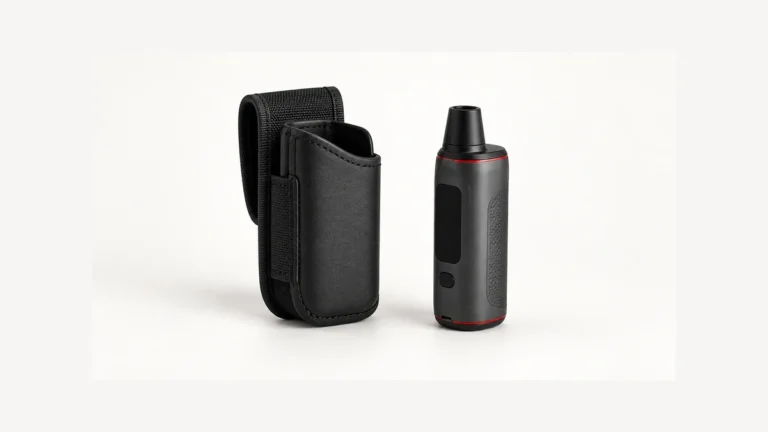
A vape holster has two separate interfaces: the attachment to a belt or another intended support, and the pocket around the device. A suitable belt loop does not establish a suitable device pocket. A flap that closes does not establish that it clears the controls. Those distinctions explain why a carrier can look the right size and still leave an owner with an unresolved fit question.
📎 1. The belt attachment and the device pocket are separate fits
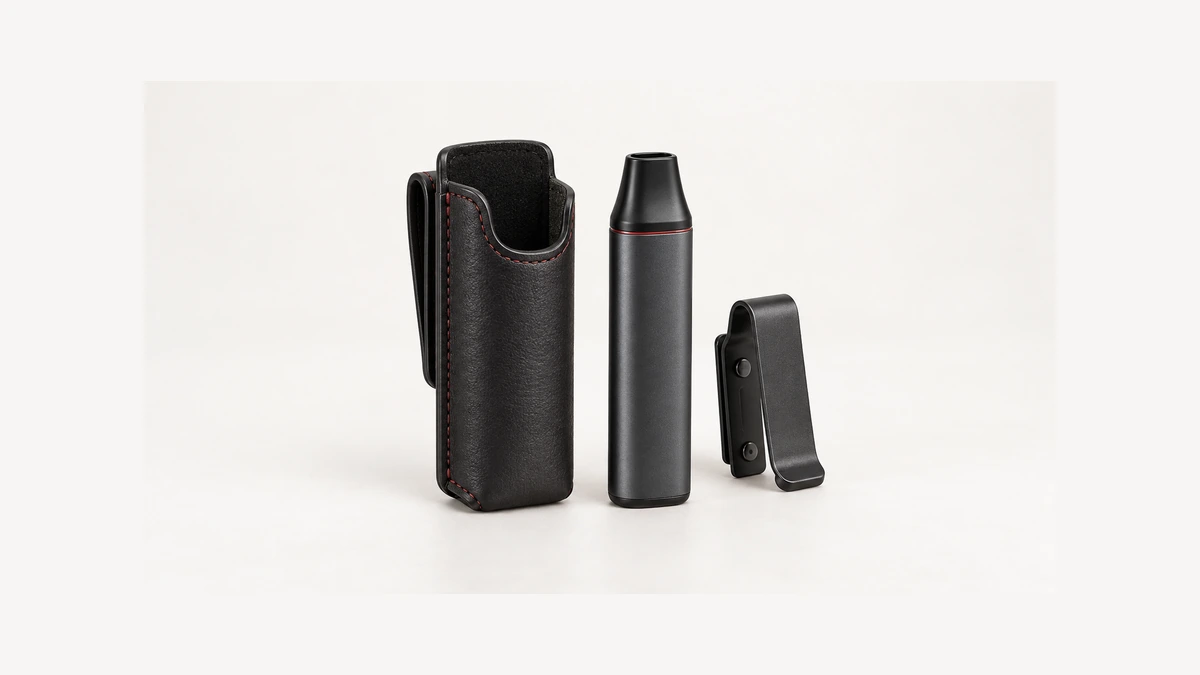
Start with the actual parts rather than the category name. A sewn loop, a spring clip and a carabiner are different attachments. The pocket may have a fixed outline, elastic panels or a shaped opening. Identify which configuration the maker describes, including the intended attachment point. An accessory intended for a bag loop should not automatically be treated as a clip for every belt edge.
In a leather-holster discussion, an owner who had lost two devices supplied dimensions while asking about a carrier. That is a concrete fit concern, not evidence that a particular pouch will prevent loss or that homemade construction is appropriate.
Record the complete configuration the device maker permits for storage. A projecting mouthpiece or an added body cover can change the occupied outline. The device’s width alone does not describe the height beneath a flap or the location of a side control. If the holster information does not address those features, leave the combination unconfirmed rather than forcing the flap closed to create an apparent fit.
📏 1.1 Make the size description unambiguous
A width measured at the device body may leave out a protruding control or a separate cover. A height measured without the mouthpiece may describe a different stored configuration from the one shown in a photograph. State where each measurement was taken and which removable parts were included. This helps the accessory maker interpret the question without guessing at the shape from a brand name.
Interior pocket dimensions and exterior pouch dimensions are not interchangeable. If a description supplies only the outside dimensions, do not subtract an assumed material thickness to invent an interior size. Seams, a liner and a closure can occupy space in ways that the outside outline does not identify. Ask for the actual dimension needed to explain the contact you have observed.
Keep the information together after a fit answer is received. A later change of device, cover or mouthpiece changes the configuration being described. An answer for the original combination should remain attached to that combination, rather than becoming a general assurance that the carrier accepts anything with a similar-looking body.
🔗 2. A clip is not the same as a threaded belt loop
A closed belt loop requires the belt to pass through the loop. An open clip has a different connection, and a carabiner connects only through the attachment arrangement it is designed for. These descriptions identify geometry, not relative strength. Do not assume that a clip will fit every belt thickness or that a loop can be added to any strap simply because both look like a narrow opening.
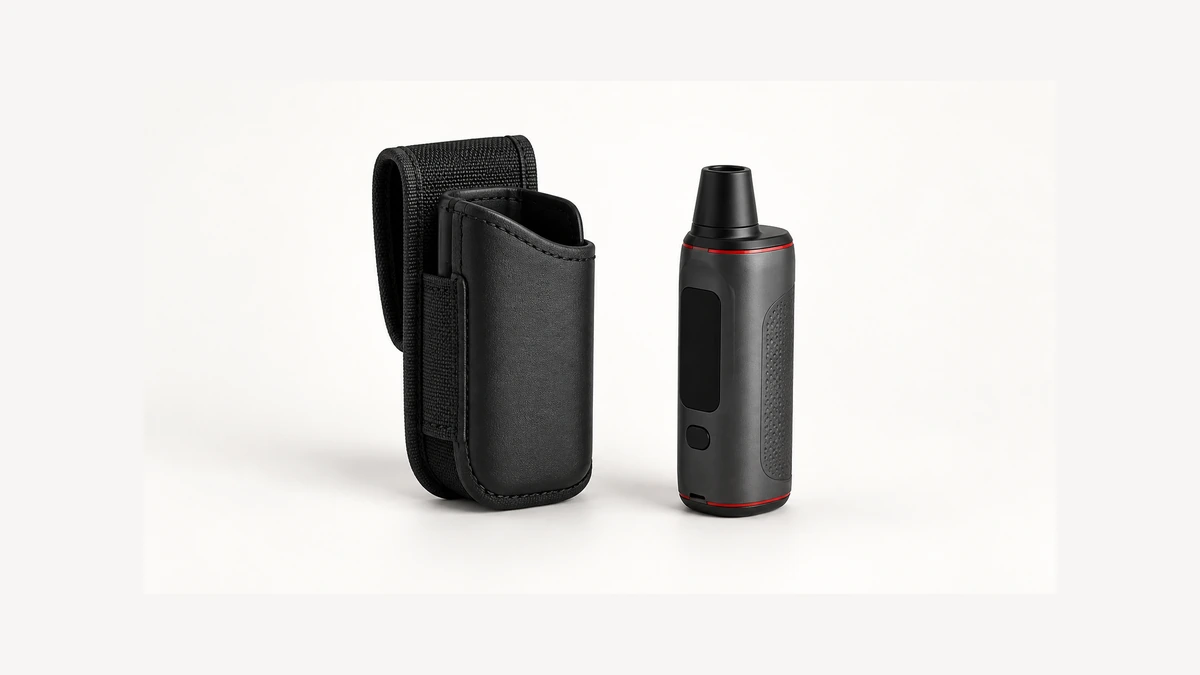
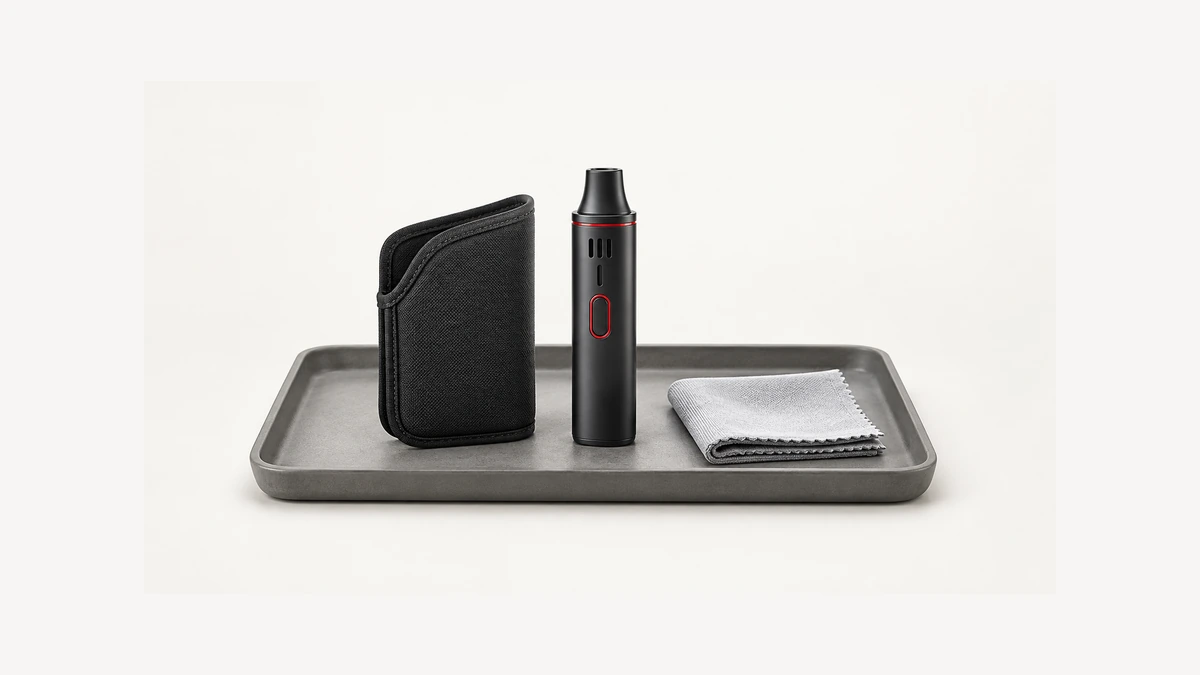
Exodos Copenhagen’s own description provides a limited construction example: a custom-sized leather holster offered with a belt loop or clip. Separately, USA Gear’s maker page describes a fabric holster with a belt loop, carabiner, flap and elastic side webbing. These examples show different layouts; they do not establish a universal device fit or attachment rating.
Keep attachment information separate from pocket information when asking for help. “The belt passes through the loop, but the flap contacts the device’s upper corner” identifies the two interfaces more precisely than “the holster fits.” If the attachment itself is damaged or unidentified, do not treat an apparently suitable pocket as a reason to rely on it.
A fastening on the carrier is also different from a control on the device. A snap may secure the flap, while a nearby button belongs to the equipment beneath it. Keep those functions distinct in a photograph or support description. The fact that the carrier snap closes normally does not show what happens at the device control it covers.
For a hypothetical example, an owner replaces a short device with a taller one while keeping the same pouch. The belt loop has not changed, but the upper corner now sits under the closure. The relevant difference is the new occupied outline. Reusing the old fit description would hide that change; identify the new configuration instead of pressing the closure harder or altering the pocket.
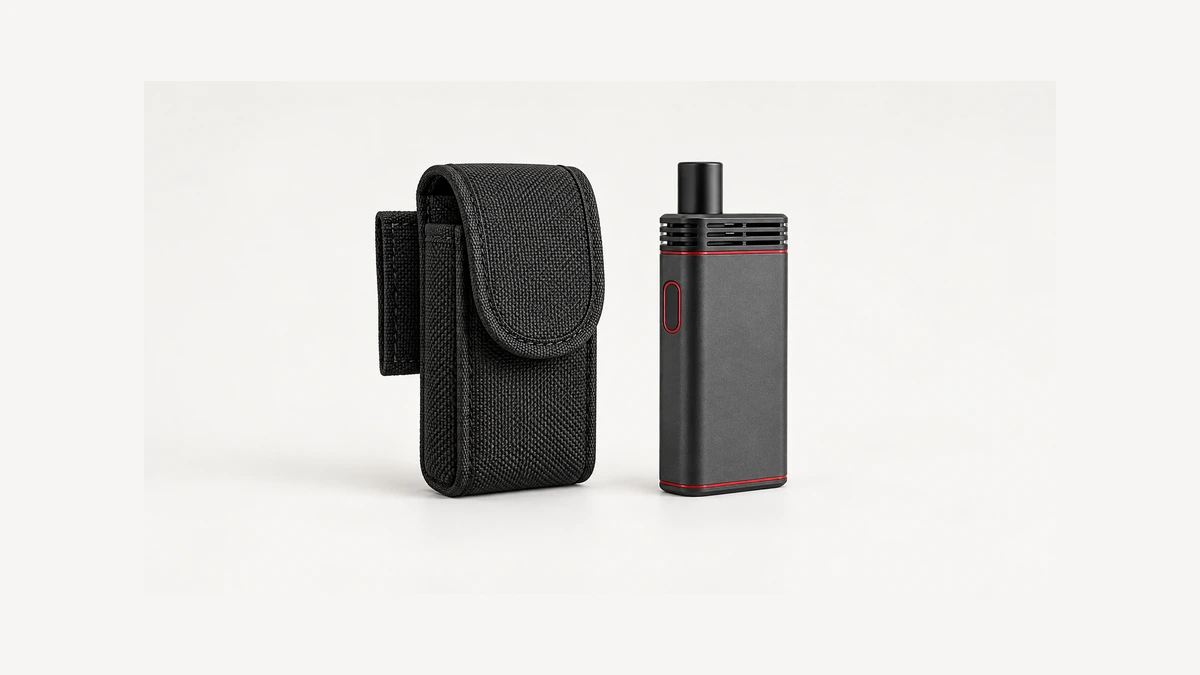
A closure can reach its fastening point while contacting a control underneath. Compare the intended pocket shape with the device’s control locations, using the maker’s storage instructions. Do not deliberately press a control through a flap to test the fit. If contact or pressure is apparent, stop treating the combination as resolved and ask about the exact configuration.
An opening near a button is not automatically a control-clearance feature. The leather example cited above describes its cutout as helping push the device upward. That stated purpose should not be rewritten as a guarantee that a flap cannot press a button. The position of the actual control and the intended storage arrangement still need their own answer.
Our vape-pen case guide addresses an enclosing case rather than a belt attachment. The distinction is useful even if both accessories have a flap. A case’s protective or storage description does not establish that another carrier can be worn, attached or loaded in the same way.
🌬 4. An open top is not a dust seal
An exposed opening and a documented dust seal are different things. A flap may cover an opening without the maker claiming a sealed enclosure. Do not infer a dustproof or waterproof rating from the material name, the presence of a closure or a picture showing a device tucked inside. A carrier can be a storage accessory while that environmental question remains unanswered.
A dusty-workplace discussion asked for a belt pouch that would cover the equipment. Replies offered various improvisations, without verified dust protection. The useful question is the enclosure boundary; the thread does not validate inserts, plugs or repurposed equipment as a remedy.
If the intended environment requires particular protective equipment or a stated enclosure rating, the workplace and device instructions govern that requirement. An ordinary holster description does not supply the missing approval. Do not add foam, tape or a household object to an opening on the assumption that it creates a tested seal.
📐 5. Look at the profile when sitting or changing clothes
The outline beside a belt can differ from the outline inside a pocket. Look at the attachment, closure and any part intended to remain exposed. Clothing, another accessory or a seated position can introduce a contact question that is absent in a product photograph. There is no universal rule here that clips swing more, loops stay fixed or a particular material sits flatter.
An older holster discussion includes comments about pocket bulk and belt profile. Those personal reactions identify the issue without proving comfort or protection. For a hypothetical example, a flap might clear the equipment on a tabletop but sit beneath a coat edge when attached as intended. The changed surroundings need consideration without operating the device to demonstrate contact.
A belt carrier also does not become an in-vehicle mounting system. Our vehicle-holder guide addresses a separate storage location. Do not move or adjust a vehicle restraint to accommodate an accessory, and do not assume that an available space in a vehicle supplies the same attachment arrangement as a belt.
🚫 6. Do not mix loose items into the device pocket
A device pocket should contain only what its intended arrangement describes. Coins, keys, spare parts or another device change the occupied space. A closure which aligned around one object may no longer align around a mixed group. That is a changed configuration, not evidence that the original pouch size was wrong.
Side webbing is also not necessarily an additional compartment. On the fabric example above it is part of the described construction. Do not invent an intended accessory for it or treat it as a place to wedge loose items. Follow the maker’s identification of actual pockets, loops and attachment points rather than assigning a new function to every visible gap.
For a hypothetical storage record, list the equipment intended for the main pocket and any separately identified component space. Keep spare cells in their approved protective storage according to their instructions; the word accessory pocket does not establish that loose cells belong there. No pocket arrangement described here overrides device or battery storage requirements.
🧴 7. Storage care is separate from device care
The holster and the device need separate care instructions. A direction for one leather finish does not establish a method for every leather-looking pouch, and a device’s exterior wipe does not automatically suit fabric webbing, a liner or an attached clip. Identify the actual accessory before applying a cleaner or conditioning treatment.
Do not use the device as a form while cleaning or reshaping its carrier. Likewise, do not introduce care products into the equipment through a cutout. If a liner, seam or attachment changes condition, record the change and ask the accessory maker about it. The question is the specified part and its condition, not which general household treatment might change its appearance.
A body sleeve is yet another contact surface. Our guide to device covers explains that separate accessory. Adding a sleeve can change the complete outline presented to a holster; the original fit information should not silently become approval for the larger combination. Keep the sleeve and holster care tasks distinct as well.
🔌 8. A holster is not a charging enclosure
The FDA’s US battery guidance calls for following manufacturer care instructions and charging on a clean, flat, visible surface away from flammable material. A belt pouch does not establish that charging arrangement. Keep a storage description separate from permission to charge.
A cable opening, an exposed port or space beside a flap is not by itself approval to charge in the carrier. Use the documented charging arrangement for the actual device. Do not plug in equipment merely to check whether a holster still lets the display be seen. The question concerns the intended charging environment, not only whether a cable physically reaches the connector.
If a carrier has a specifically documented function beyond passive storage, that statement belongs to that particular accessory and configuration. Do not transfer it to another pouch because the fabric, opening or belt attachment looks similar. A generic word such as rugged does not answer a charging, environmental or device-compatibility question.
When a fit remains unclear, provide the accessory model, the device’s intended storage configuration and the exact contact or closure problem. A photograph of the empty pocket and the separate device can communicate the question without forcing them together. Ask which attachment and pocket arrangement is intended; avoid turning a closed flap or a familiar belt into proof of complete compatibility.