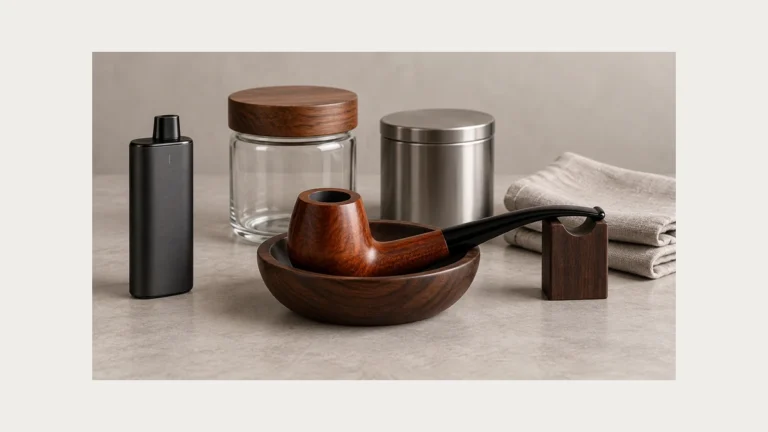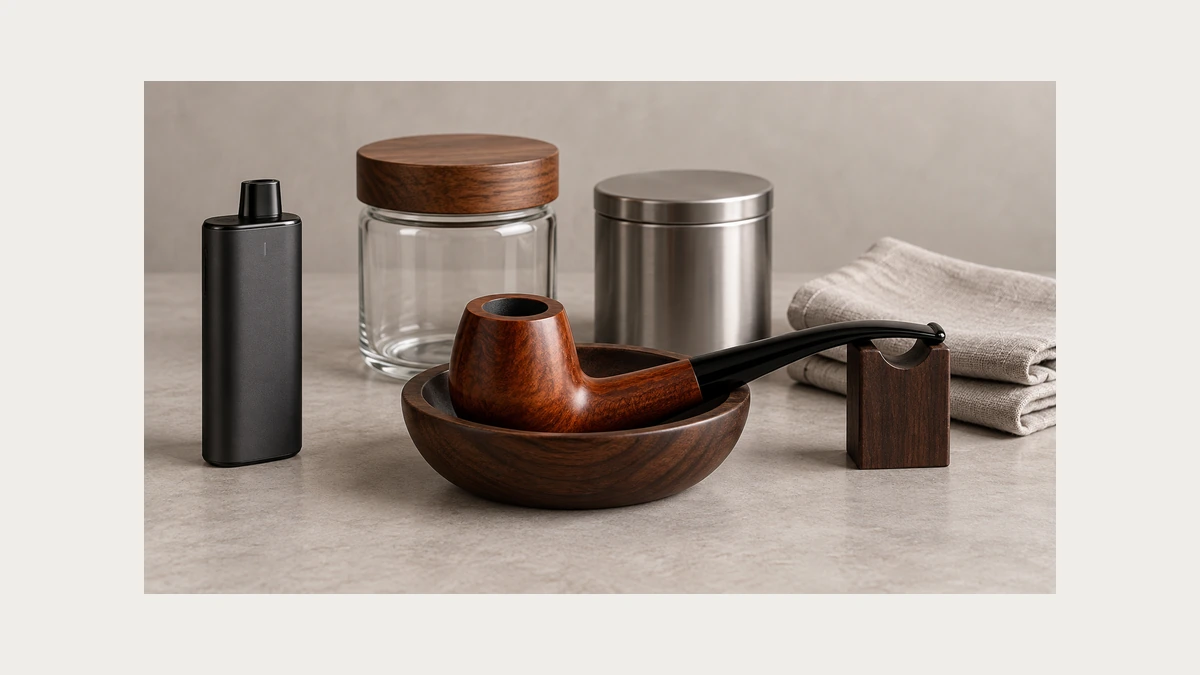
📌 1. A tobacco pipe holder supports a shape, not just a pipe count
A tobacco pipe holder needs to support the particular pipe placed in it. The number of slots describes capacity, but does not establish that a long stem, a broad bowl and a sharply bent pipe all fit those positions. For an existing stand that leaves a pipe tilted or crowded, look at the bowl cradle, the upper support and the surrounding shelf space separately. A problem at one of those points can be hidden by an otherwise tidy display.
Picture six different empty, cold pipes being considered for a six-position bookshelf rack. Four have bowls and stems that correspond to the intended supports. A fifth has a broader bowl whose widest section lies above the cradle. A sixth has a bend that brings its stem toward the neighboring position. This hypothetical arrangement illustrates why capacity alone cannot answer fit. Do not put an unsupported pipe in place or bump the shelf to test the mismatch.
A similar issue can occur in a slotted drawer insert. Imagine a straight pipe resting within its recess, while a bent one rises above the surrounding liner. The second shape needs different vertical space even when the two bowls have similar widths. That is an example of clearance, not a diagnosis of every bent pipe or every drawer. Look at the actual contact points on an empty, cold pipe before deciding what the holder is failing to support.
A holder that has worked for years can also acquire a new surrounding constraint. A shelf may have been moved closer to a cabinet door, a new liner may raise the resting surface, or another object may now sit beside the stem. These are ordinary changes to the available space. Before blaming a pipe or stand for suddenly fitting badly, compare the complete present arrangement with the arrangement in which it previously sat securely.
🔩 2. Bowl cradle and stem support do different jobs
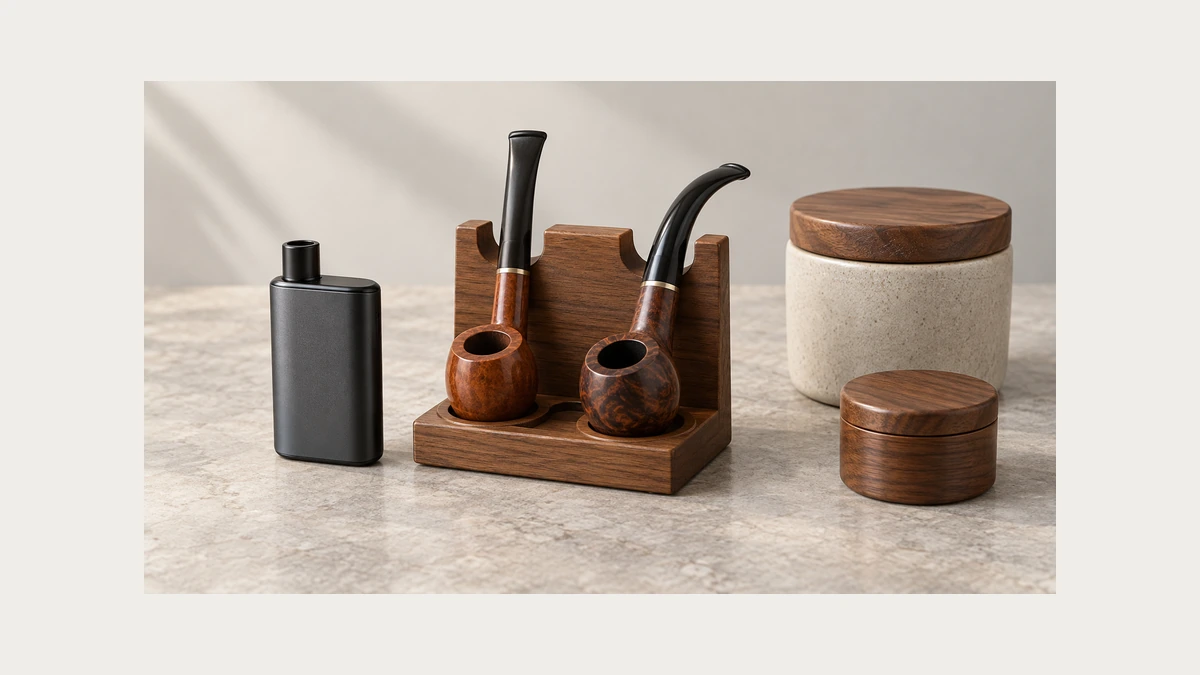
A bowl cradle gives the lower portion of the pipe a shaped resting place. An upper support contacts another part of the pipe, such as the shank or stem, to keep the intended position. Some holders combine these features. Others are single sculpted rests. Count the real support surfaces rather than dividing every holder into two exclusive categories: the important question is where this particular pipe meets this particular stand.
Savinelli provides two short manufacturer examples: a one-place drop-shaped ceramic holder, and a ceramic-base stand with flexible metal support. These descriptions establish different layouts and a nominal capacity of one. They do not establish that either supports every bowl shape, how much load it tolerates, or permission to bend a support around an unfamiliar pipe.
If an empty pipe sits differently after being moved to another holder, compare the contacts without pushing it into position. Is the bowl resting inside the intended cradle or on its rim? Does the upper support meet the shank or press against an unintended area? Is part of the stand itself rocking on the shelf? Those are separate observations. Weight, a damaged base and a mismatch in shape should not all be diagnosed from the same photograph.
🕰️ 3. Long and bent stems change the space around the stand
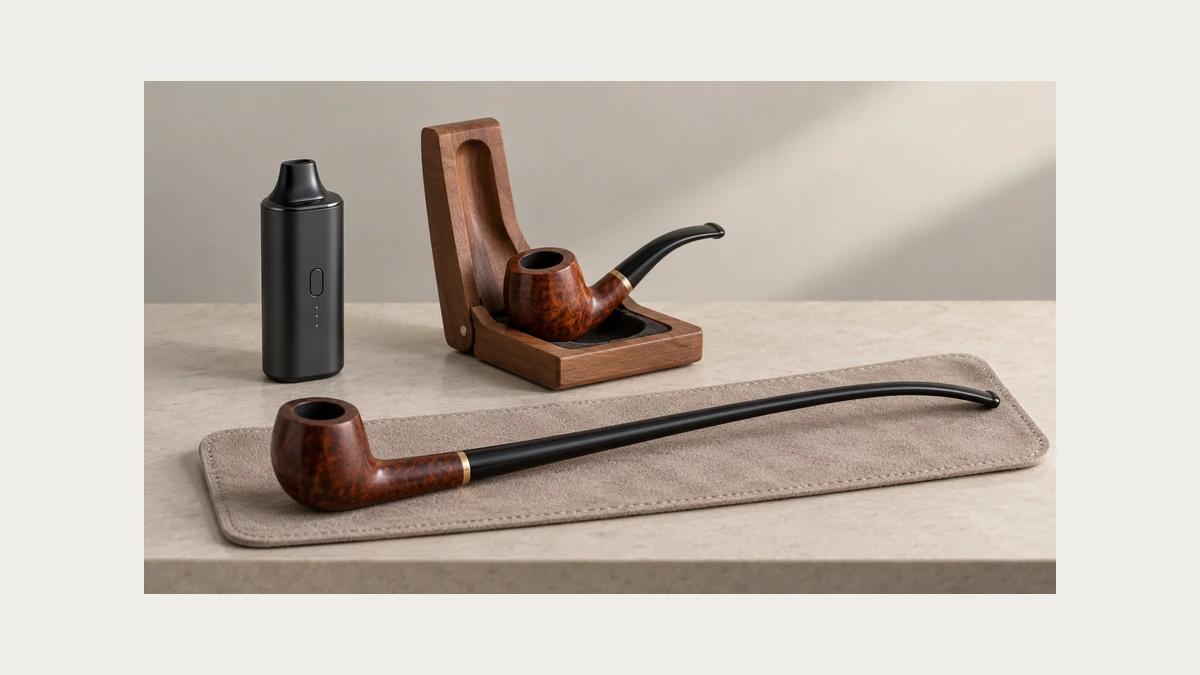
Stem length and bend radius determine how much open space a holder actually needs around it, and that space requirement isn’t visible from a photo of the stand alone. A churchwarden-length stem needs lateral clearance a short stummel-and-stem pipe never asks for, and a stem with an elbow bend needs clearance in a different direction than a straight one.
A July 2023 identification thread recognized a small hinged wooden object as a folding pipe stand. Visible owner replies disagreed about its usefulness for long churchwarden pipes versus shorter ones. That supplies a real fit question, not a universal verdict about folding stands. The thread does not establish the hinge spacing, load rating or support arrangement of another stand that looks similar.
In a July 2020 rack discussion, an owner described a long pipe as out of place and considered separate support. What they do show is why a full rack and a well-supported set of shapes are different ideas. A nominally available slot may still leave the actual pipe crowded or overhanging.
The longest visible dimension is not always the one creating a collision. A short bent stem can rise toward a shelf above, while a longer straight stem may remain within an open horizontal space. In a hypothetical side-by-side display, either could interfere with its neighbor before reaching the cabinet wall. Keep both the upper and lower support points in view. A gap between bowls does not establish that the stems also have room.
📦 4. A folding stand is not a protective case
Folding stands — small, hinged, often wooden supports that collapse flat for travel — solve a different problem than a case does, and the two get confused often enough to be worth separating clearly. A stand holds a pipe upright or at rest on a flat surface and folds down when not in use. A case encloses the pipe on multiple sides, usually with a lid or walls and some kind of cushioning.
A folding stand does neither of the latter two things.
A small hinged wooden object can resemble a box while functioning as an open rest. Look at it in its intended open position: does it provide a recess and support, or does it enclose the pipe? A folding support can be useful to identify without treating it as a protective case. Its hinge does not create protective walls around an exposed bowl or stem, and an empty folded stand does not reveal a transport rating.
The distinction becomes practical the moment a stand is carried somewhere. A felt-lined box with a closing lid keeps a pipe separated from whatever else shares the same bag or drawer. A folded travel stand tucked into a jacket pocket next to a cold, empty pipe does not: the bowl is exposed on both sides, and nothing in the stand’s design stops the rim from contacting a set of keys or a coin riding in the same pocket. That isn’t a flaw in the stand — a stand was never built to do a case’s job — but mistaking one for the other is an easy way for an otherwise well-stored pipe to pick up a scuff it didn’t need to.
🚪 5. Rack orientation does not replace cleaning instructions
A September 2021 homemade rack discussion prompted disagreement about stem-up and stem-down storage. The maker had built a rack for corn-cob pipes, not a rack made from corn cob, and explicitly noted only a few days of experience with the arrangement. That is too narrow a basis for a drying rule. Orientation claims should be checked against the pipe maker’s own care instructions, rather than treated as established by enthusiastic replies.
Cabinet clearance is something you can check directly without choosing a side in an orientation debate. First consider the empty rack and the path of the door, shelves and hinges. Account for the complete cold pipe’s shape before placing it there; do not close a door against a stem to see whether it fits. The space visible with a cabinet fully open can differ from the space available as its door moves.
The same door-clearance and shelf-load logic shows up in other dry-storage hardware built for a cabinet environment; AOVAPE’s guide to display case shelf loads and door clearance for bongs works through comparable spacing problems for different glass accessories, and the underlying clearance questions translate even though the hardware and the items it holds are not the same.
🧹 6. Separate the clean display area from ash and tools
A display stand and a cleaning area tend to end up on the same shelf by convenience, and that proximity causes a specific kind of dirt that has nothing to do with the pipe itself. An empty rack sitting next to an open ashtray, a reamer, or a pipe cleaner collects fine residue on exactly the surfaces — felt pads, ceramic cups, notch edges — that are meant to cradle a pipe’s finish without marking it.
Consider a clean empty holder beside a separate waste receptacle. If visible debris has reached the cradle or liner, deal with that surface under the holder maker’s care instructions before returning a pipe to it. There is no need to assume every dark pad is dirty or every marked ceramic surface can be soaked. Identify any removable liner or glued pad first. The display holder and the waste container have different jobs even when they occupy the same table.
Keep a separate location for clean display hardware and used cleaning tools or waste. If residue reaches the holder, use its own care instructions rather than the waste container’s routine. Our guide to ashtray lids and separate cleanup explains the different role of a waste receptacle. A holder is not an ash container or authorization to set hot equipment on an unidentified pad.
Liners deserve a separate care question. A loose felt insert, a glued pad and a solid ceramic cradle are not the same surface merely because each sits beneath a bowl. Identify which parts the maker allows to be removed or cleaned. If a pad has shifted into the intended resting space, describe its position rather than pressing the pipe down over it. The holder should not require the pipe to serve as a tool for flattening a damaged liner.
📏 7. A useful fit note names the contact point and clearance
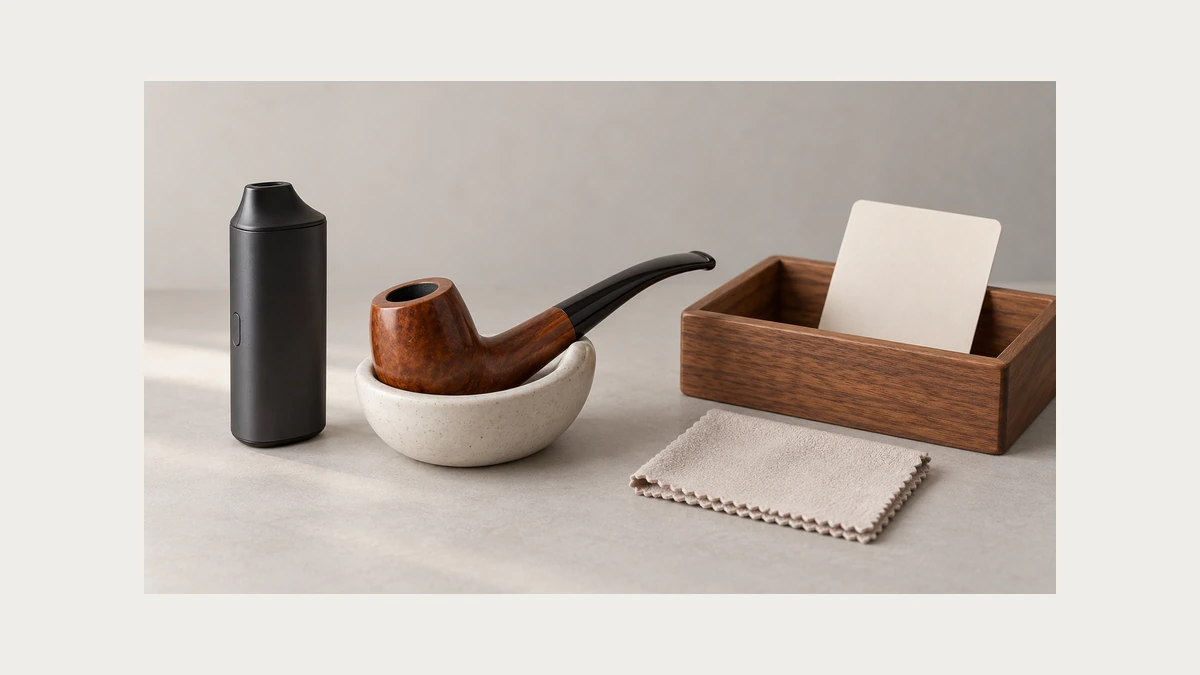
A useful fit description names the contact point and the missing space. ‘The bowl rests on the cradle rim’ and ‘the stem crosses the door path’ explain more than ‘the rack is too small.’ Include the complete shape and the shelf arrangement, not just the number of pipes already sitting there. A clear description can distinguish a problem with one position from a problem affecting the whole rack.
The manufacturer examples above identify layout and capacity; neither description is a universal-fit guarantee. Apply the same distinction when reading a vague label on an existing stand. Our guide to base fit and side support for bong holders examines another accessory category in which the contact surface matters. It does not establish that a holder made for one type of hardware fits another.
For a pipe that does not sit securely, leave it out of the questionable holder while checking the intended support arrangement. Bowl width, total length, bend, cradle shape and the surrounding clearance may all matter; no two measurements settle every design. A photograph showing both contacts and the complete shelf space is more useful than a close-up that hides the unsupported end. The aim is to understand the existing mismatch, not to force the pipe or reshape the stand.